Applied research · Peer-reviewed

Research &
publications

Water poverty persists in many regions of the world, partly because water projects fail within a few years of being built. For more than nine years we have studied why, and what it takes to make water services last.

Extreme water poverty

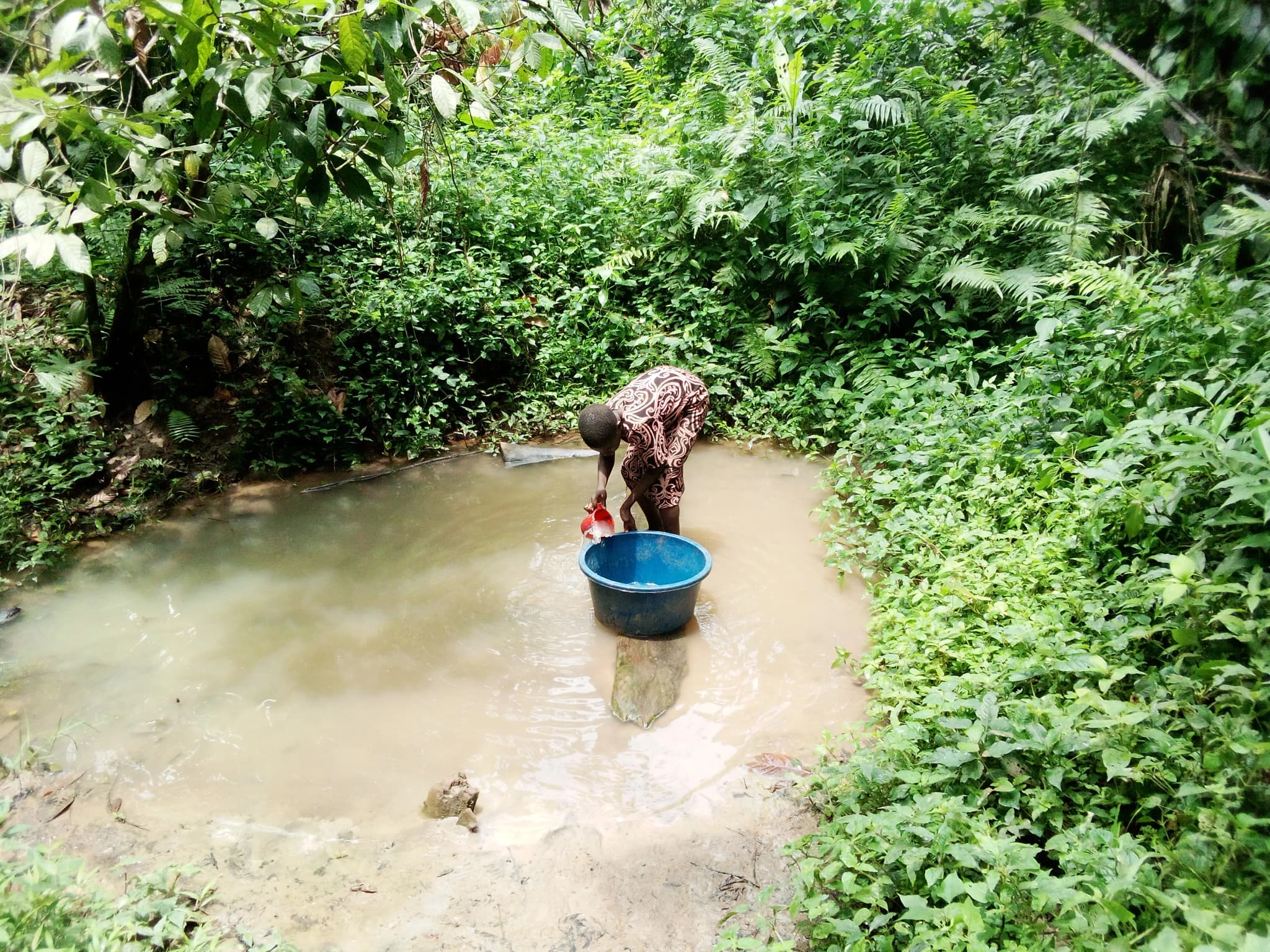
Fetching drinking water from a stream. Ayetoro, Osun State, Nigeria.

The scale of the challenge.

Global drinking water access

The world has 8.2 billion people. Billions of them still live without safe drinking water. For billions more, reliable data does not even exist, so no one can say for certain. And even where water flows today, much of it comes from infrastructure that will fail within a few years. The water gap, the evidence gap, and most importantly the sustainability gap: all three are why we do this research.

Safely managed drinking water

3.9Bsafely managed
2Bnot safely managed
2.3Bno reliable data

At least basic access

7.4Bbasic access
688.8Mwithout
85.9Mno data

Bars are proportional to the world population of 8.2 billion.

Extreme water poverty

688.8M

people without even basic drinking water access

Behind the global numbers is a harder truth: 688.8 million people live without even a basic drinking water service. This is extreme water poverty, and these are the communities our research and our projects exist to serve first.

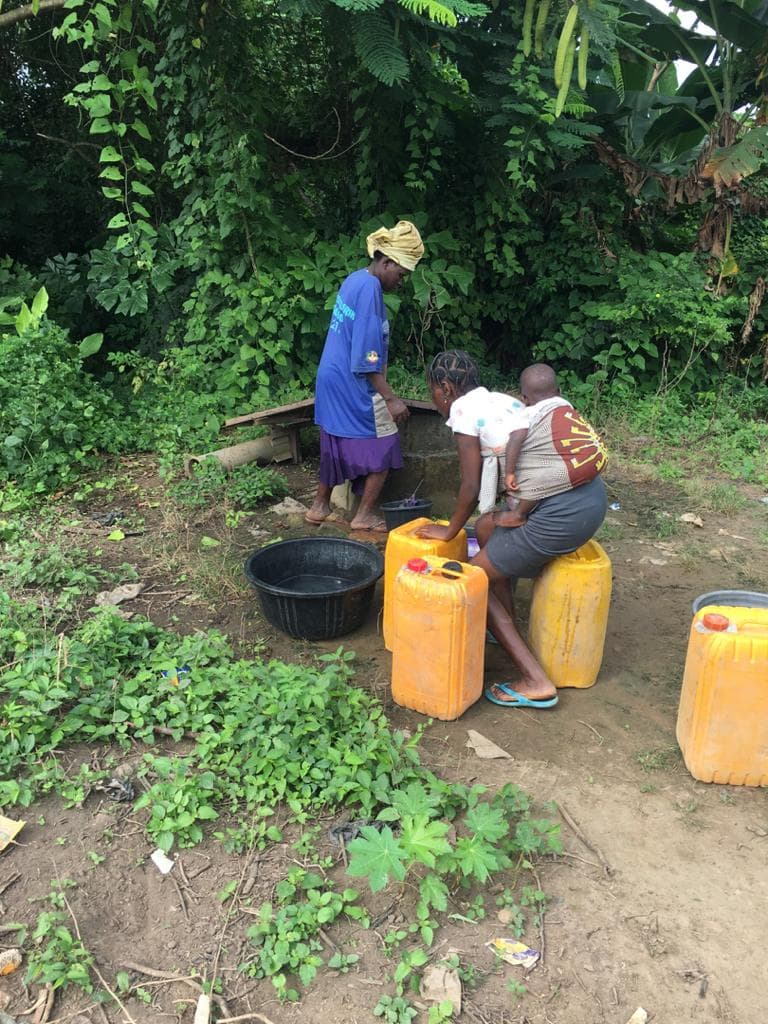
Women filling yellow jerrycans from an unprotected well at Alagba Village, Ibadan, one carrying a baby on her back

Extreme water poverty

Fetching water from an unprotected well. Alagba Village, Ibadan, Oyo State.

Publications

These publications are the output of our applied research, and each study builds on the one before it. We publish to share our findings, so what we learn in the field can serve everyone working toward water services that last.

Water infrastructure sustainability in Nigeria: a systematic review of challenges and sustainable solutions

Water Policy · IWA Publishing · November 2023 · Peer-reviewed

Abstract:

Using the PRISMA method, this systematic literature review synthesized findings from 15 studies to elucidate the key factors contributing to water infrastructure failure in Nigeria and propose evidence-based sustainable solutions. The study identified technical, financial, environmental, social, political, and institutional factors as predominant challenges in achieving water infrastructure sustainability. In response to these challenges, the researcher proposes a comprehensive 'Sustainability Framework for Water Infrastructure', designed to guide every stage of water infrastructure development: pre-construction planning, construction, and post-construction monitoring and management.

Read the full paper: https://doi.org/10.2166/wp.2023.173

In our model

This study provides the understanding of the 265 sustainability issues, across technical, financial, environmental, social, political and institutional factors, that our framework considers during diagnosis. It defined the problem the rest of the research set out to solve.

Water infrastructure sustainability challenge in Nigeria: a detailed examination of infrastructure failures and potential solutions

Water Supply 24 (6) · IWA Publishing · June 2024 · Peer-reviewed

Abstract:

Achieving Sustainable Development Goal 6.1, universal and equitable access to safe and affordable drinking water, is a critical global challenge. This study examines rural water borehole functionality across 1,696 communities using GIS mapping, Spearman's rho correlation analysis and field interviews. It finds that 49.8% of communities lack improved water sources and only 25.5% benefit from functional boreholes, and proposes solution strategies built on community mapping and smart water infrastructure.

Read the full paper: https://doi.org/10.2166/ws.2024.127

In our model

This study took the research into the field. Across 1,696 communities it documented why and how water systems fail in practice, and created the baseline evidence that the predictive tools in the next studies are built on.

Sustainability framework for water infrastructure development in Nigeria: a modeling approach

Water Supply 24 (8) · IWA Publishing · August 2024 · Peer-reviewed

Abstract:

This study introduces the Predictive Iterative Sustainability Model (PISM), a tailored framework designed to enhance water infrastructure sustainability evaluations in Nigeria. Integrating Viability Rating, Sustainability Rating and predictive processes, the model draws on 70 Likert-scale questions covering 265 catalogued sustainability challenges. Applied to five Nigerian communities, it produced viability scores of 63.95–67.91% and sustainability ratios ranging from 179% to 424%.

Read the full paper: https://doi.org/10.2166/ws.2024.193

In our model

This study turned the field evidence into a planning tool. PISM rates a proposed water asset's viability and sustainability before construction begins, so risk is assessed before money is spent. If the evidence says a project will not last, we do not build it.

Evaluating the effectiveness of smart water management systems in enhancing the resilience and sustainability of water infrastructure in Nigeria

AQUA · IWA Publishing · February 2025 · Peer-reviewed

Abstract:

This study rigorously evaluates the effectiveness of smart water management systems in addressing prevalent water infrastructure failures, resilience, and sustainability challenges in Nigeria. Analysing 1,095 days of operational data from a smart water kiosk tracked with Target 6.1 software, it documents self-sustainability initially reaching 22%, dropping to zero under aid overlap (a novel challenge documented for the first time), and recovering to a 100% sustainability rating with a 97.1% reliability rating.

Read the full paper: https://doi.org/10.2166/aqua.2025.291

In our model

This study tested the approach in a real community. Three years of live data confirmed the smart water solution's reliability, and revealed two constraints now built into our planning: overlapping aid can collapse a paid service, and underutilisation threatens sustainability even when infrastructure works. The next study set out to explain it.

Diagnosing water infrastructure underutilization: a planning framework for behavioral risk, smart monitoring, and SDG 6.1 alignment

Water Supply · IWA Publishing · October 2025 · Peer-reviewed

Abstract:

Water infrastructure in resource-scarce settings often remains underutilized despite being technically sound and publicly funded. Combining household surveys (n=86), GIS analysis, IoT flow data and clinic records, this study introduces the Water Infrastructure Underutilization Principle. Even with free treated water available, only 16.3% of households adopted the smart infrastructure while 97.7% rated their existing sources "very good". Proximity-effect modelling showed each additional minute of walking reduced the odds of adoption by 48%.

Read the full paper: https://doi.org/10.2166/ws.2025.088

In our model

This study answered the question the field data raised: why technically sound infrastructure goes unused. Its Water Infrastructure Underutilisation Principle now shapes how we assess behaviour, perception and walking distance before a site is chosen.

Smart solutions – a Nigerian answer to access

The Source Magazine (37), 32–35 · International Water Association · December 2024 · Industry publication

In brief:

Achieving SDG 6.1, universal and equitable access to safe and affordable drinking water, is a critical global challenge, with more than 336 million people in sub-Saharan Africa lacking adequate water services. This article shares our research and field results with the global water community, and makes the case for smart, demand-aware water systems as a practical route to SDG 6.1.

Read the article: thesourcemagazine.org

In our model

This article tells the story of the research cycle in practice: pilot projects that serve communities every day while operating as research platforms, and how that cycle can serve the wider push for SDG 6.1.

The goal: water services that last.

Across the world, too many water points fail within a few years of being built. Ending that is what this research is for. We publish so our methods are tested by independent experts and shared with everyone working toward safe water, and every project we deliver feeds what it learns back into the framework.

01

Diagnose
& design

Community mapping, six-factor diagnosis, predictive modelling (PISM)

02

Implement
& learn

Live delivery with 16+ metrics tracked daily on the Target 6.1 Map

03

Strengthen
& scale

Findings published, frameworks shared, the model revised

Every project we deliver is a working test of the model, reporting live data on its own public page. See the research in practice:

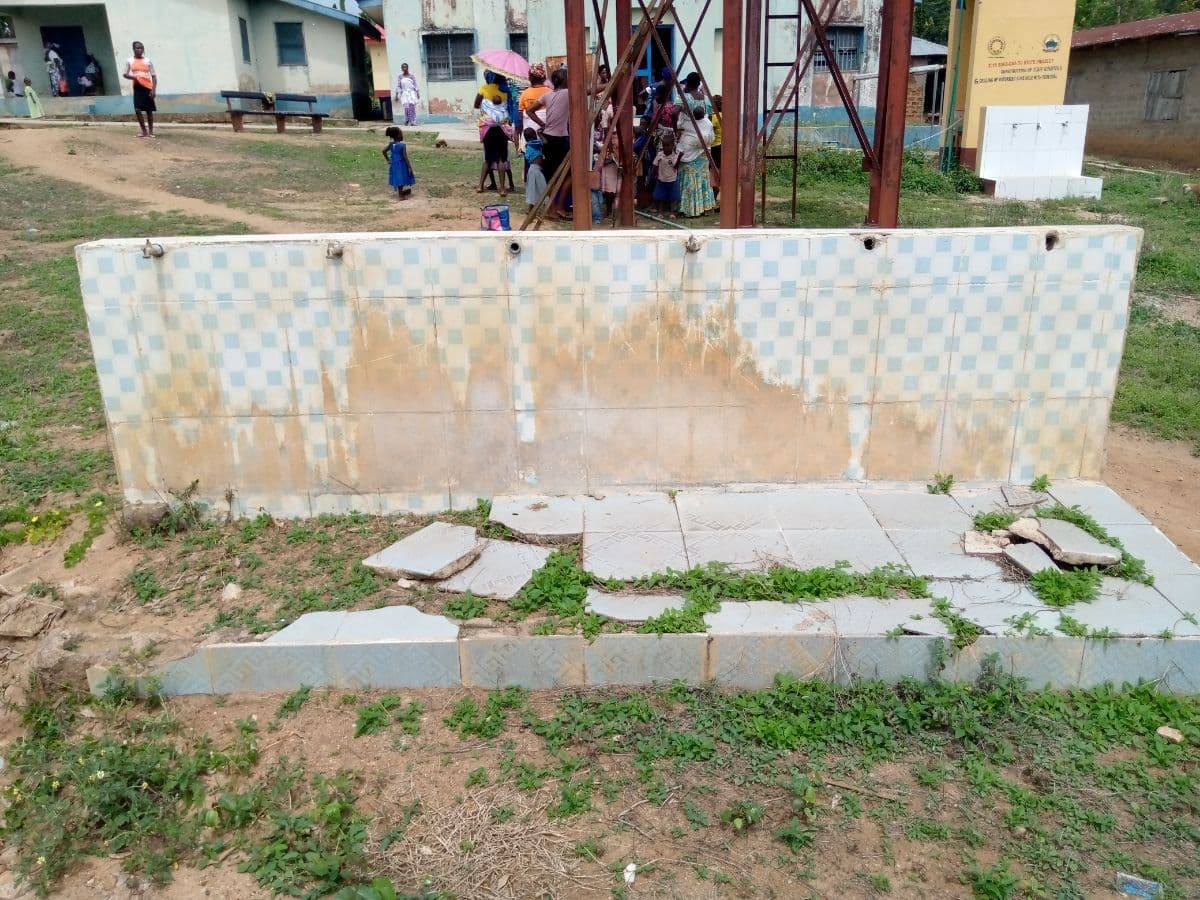
A failed public tap stand in Ijero Local Government Area, Ekiti State: six taps on a tiled stand, none of them working, with broken paving and weeds in front and the community gathered behind

Field documentation · A failed water point, Ijero LGA, Ekiti State.

Research leads

FairAction is an industry partner of the University of Technology Sydney. UTS is ranked #11 in the world in water resources and #18 in civil engineering, and #1 in Australia and New Zealand in both, by Best Global Universities 2026–27.

Saravanamuthu Vigneswaran

Emeritus Professor Saravanamuthu Vigneswaran

Director, Centre for Technologies in Water and Wastewater; Professor of Environmental Engineering, University of Technology Sydney.

Jaya Kandasamy

Associate Professor Jaya Kandasamy

Specialist in computational hydraulics, renowned for his expertise and educational courses in HEC-RAS, both in Australia and internationally.

Oluwagbemi Samuel Adeoti

Dr Oluwagbemi Samuel Adeoti

Transdisciplinary researcher dedicated to achieving clean water for all through innovative research and development, bridging academic and industry practices.

Adégbóyèga Adeniran

Dr Adégbóyèga Adeniran

Environmental engineering expert focused on enhancing the resilience and sustainability of water infrastructure systems.

Water services that last are built on evidence. Building that evidence, and acting on it together, is a fair action.