
The Fairaction Model

Building water services that last.

FairAction exists to help achieve SDG 6.1: safe and affordable drinking water for all. Access is not achieved when infrastructure is installed. It is achieved when water services are safe, reliable, affordable, used by the community, properly managed, and able to keep working over time.

A result not designed to be sustainable is not a solution.

Dr Samuel Adeoti, Founder & CEO of Fairaction
Why sustainability matters

A failed water project can leave a community worse off than before support arrived.

When a water point is installed, a community reorganises around it. Families stop walking to distant streams. Children grow up drinking from the new source. Routines, school attendance, and daily life all depend on it. When the system fails, they are forced back to the stream they left behind, now far more contaminated, and their bodies are no longer adapted to it. People fall sick. People die.

A documented case

Atakumosa West, Bara Community

Osun State, Nigeria

Children of the Bara community returning to their old stream after their borehole failed and could not be repaired. They had grown up drinking from the borehole, and were no longer adapted to the contaminated source.

View on our Target 6.1 Map

Built to close the gap.

Closing the gap between water that is installed and water that keeps working is what it takes to reach SDG 6.1, and it is exactly what FairAction exists to do. In this short talk, our founder explains how.

Watch the talkRethinking water solutions · SXSW, Innovation and Entrepreneurship Conference

The Model

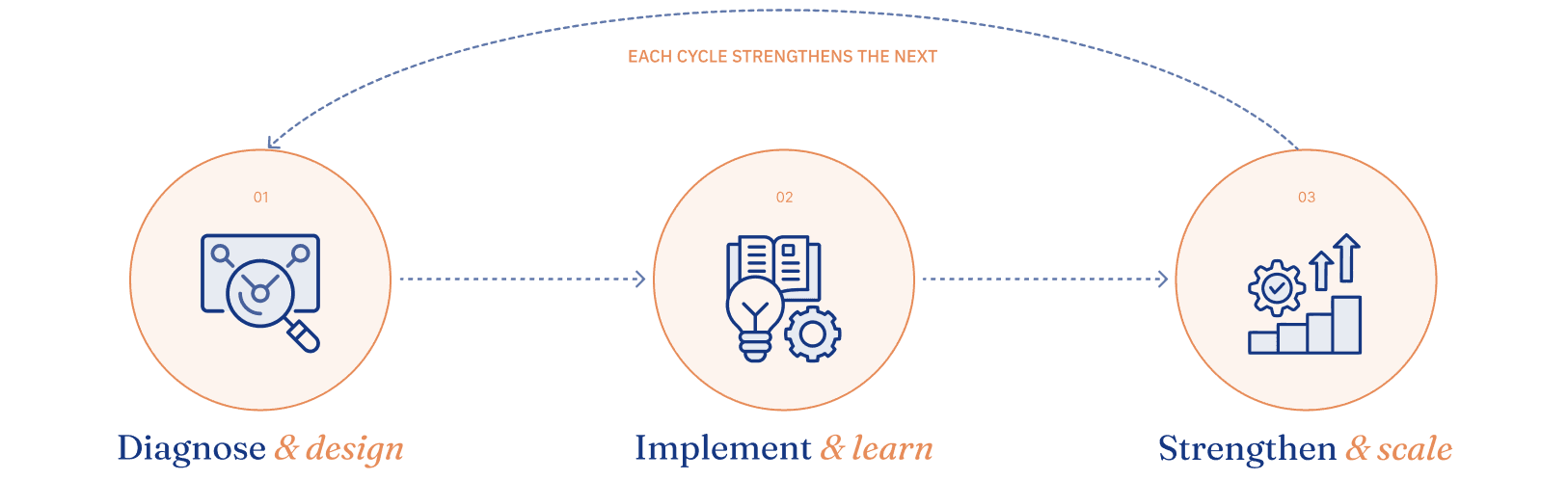
The model is delivered through three functions, working together as a connected cycle. Diagnosis informs implementation. Implementation produces the evidence that strengthens what the sector knows. Sector strengthening creates the partnerships and conditions for the next community to be served better than the last.

The three-function cycle of the FairAction Model

Stronger community outcomes. Stronger sector capability. Wider progress towards SDG 6.1.
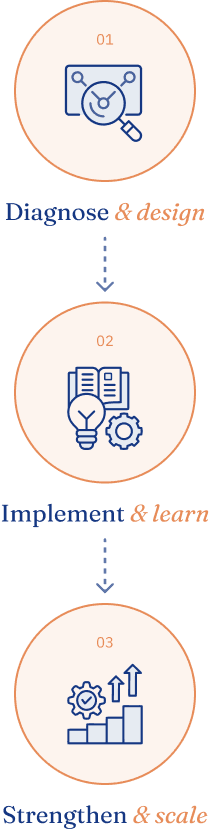
The three-function cycle of the FairAction Model
Each cycle strengthens the next

Stronger community outcomes. Stronger sector capability. Wider progress towards SDG 6.1.

Function 01

Diagnose & design

We map the community, study why services have failed in similar contexts, and assess sustainability risks. The build follows the diagnosis, not a template.

What this prevents

Poor targeting, aid overlap, over- or under- engineered solutions, weak local ownership, infrastructure underutilisation.

Function 02

Implement & learn

Sustainable water service delivered in real communities, with daily monitoring of functionality, water quality, finance, and use. Each project is also a working test of the model.

What this creates

Safer water, stronger reliability, earlier problem detection, real evidence.

Function 03

Strengthen & scale

Field learning becomes frameworks, monitoring methods, digital tools, and advisory support that other organisations, governments, and researchers can use.

What this achieves

Stronger sector capability, responsible scale, wider progress towards SDG 6.1.

FairAction is a charity, but it does not give water away. Communities pay an affordable fee for the water they use, and that revenue funds the operation and maintenance that keeps the service running. Sustainability is built into the economics, not dependent on the next grant.

The model built to date has been based on partnerships. Research and digital systems design supported by Clean Water for All Pty Ltd and Essential Need Projects Limited. The intellectual property underpinning the sustainability framework and algorithmic software is held by Clean Water for All Pty Ltd.

The numbers behind our model
9+
years of research and development
265
sustainability challenges systematically catalogued across 6 major factors
6
peer-reviewed publications
1,700+
communities. We learned from the lived experience of over 1 million people
8.4M
people within our current mapping scope
1,862
days of live longitudinal data across 5 Smart Water Solutions, and counting
100%
sustainability rating with 98.7% reliability over 5 years
See a community's live record: Isale Oja
16+
metrics tracked continuously for model improvement

The water crisis will not be solved one project at a time.
It will take partnership with all hands on deck prioritising sustainability.

SDG 6.1 will be reached through collaboration across the sector: sustainable solutions delivered, sector capacity built, evidence translated into frameworks that other organisations can adapt for the contexts they work in. The FairAction Model is built to contribute to all three.

We won't stop until every child, in every community, has sustainable access to safe and affordable drinking water.

Take fair action today to help achieve this mission.