

Health is the SDG where water's role is most directly visible. Around 1.4 million people die each year from inadequate water, sanitation and hygiene, the great majority in low- and middle-income countries. Diarrhoeal disease, the third leading killer of children under five, is the headline number, but the connection runs through three distinct mechanisms: the infections that drive child mortality, the neglected tropical diseases that still affect around 1.5 billion people, and whether the healthcare facilities meant to save lives are equipped to do so at all.
Children under five carry the heaviest share of this burden. Diarrhoeal disease alone is the most legible example of how a missing water service translates almost immediately into preventable mortality. The harder questions, which this article takes on, are why the global decline in water-related disease deaths has slowed in the places that need it most, why the neglected tropical disease agenda still depends on infrastructure that is not being delivered, and why a hospital without running water can be a place where new infections start rather than where they end.
Why this article matters to FairAction
FairAction is a research-led water charity advancing SDG Target 6.1: universal and equitable access to safe and affordable drinking water for all. Our work has been concentrated in Nigeria, where over more than nine years we have mapped 1,700 communities, catalogued 265 sustainability challenges that undermine lasting water service, and validated a predictive sustainability model through live, longitudinal field deployments. The mission is global. Nigeria is where the model is being built and proven; it is designed to be adapted and scaled to the other regions where SDG 6.1 is hardest to deliver.
SDG 3 is where the cost of failing to deliver SDG 6.1 is counted most directly in lives. The water deprivation that prevents a community from drinking safely is the same deprivation that fills its under-five wards with diarrhoeal disease, that lets schistosomiasis and trachoma persist where the infrastructure to interrupt them does not, and that means birth attendants in too many maternity units still cannot wash their hands when it matters most. The places where SDG 6.1 is hardest to deliver are the places where SDG 3 is most off track.

Where health and water sit today
The 2025 edition of the WHO and UNICEF Joint Monitoring Programme report is the most authoritative current source on global progress. Roughly one in four people, around 2.1 billion in total, still lack safely managed drinking water, including 106 million who drink directly from untreated surface sources. Around 3.4 billion lack safely managed sanitation. The health consequences are measured in WHO's latest burden of disease estimates: around 1.4 million people die each year as a result of inadequate drinking water, sanitation and hygiene, with unsafe sanitation accounting for around 564,000 of those deaths.[1][2]
Around 60 per cent of all diarrhoeal deaths globally are attributable to WASH risk factors. The most recent systematic update from Prüss-Ustün and colleagues estimated that 829,000 diarrhoeal deaths and around 49.8 million disability-adjusted life years are caused each year by inadequate water, sanitation and hygiene, around 297,000 of those deaths in children under five.[5] The 2024 Global Burden of Disease update confirms that diarrhoeal mortality has fallen from 2.9 million annual deaths in 1990 to around 1.2 million in 2021, but children under five still carry the highest mortality rate of any age group.[6]
Water's specific role in SDG 3
SDG 3 contains thirteen targets, from maternal mortality to non-communicable diseases to mental health. Three of them carry water inside them in ways the sector under-acknowledges. These are the three this article focuses on.
From a contaminated source to a paediatric ward
The pathway from water service to child mortality is direct, mediated by environmental enteric dysfunction and repeated exposure to faecal pathogens. WHO places diarrhoeal disease as the third leading cause of death in children aged 1 to 59 months, with around 444,000 under-five deaths a year and an additional 51,000 in the 5 to 9 age group, against roughly 1.7 billion episodes of childhood diarrhoea worldwide.[7]
The most water-determined burden in global health
Several of the 21 recognised neglected tropical diseases have water and sanitation as core transmission or prevention routes: schistosomiasis, soil-transmitted helminthiases, trachoma, lymphatic filariasis and guinea worm. The WHO 2025 report found 1.495 billion people required interventions in 2023, around 32 per cent below the 2010 baseline, with 56 countries having eliminated at least one NTD.[8] The progress is real, and fragile: aid cuts now threaten the countries where transmission still depends on infrastructure that is not yet built.[9]
The water that decides whether a birth is safe
Here the connection runs through healthcare facility WASH. The latest JMP update found around 1.7 billion people use facilities lacking basic water, including 874 million served by facilities with none at all. In the 60 OECD-classified fragile contexts, 37 per cent of facilities have no basic water and only one in five has basic sanitation.[10] WaterAid estimates infections from unclean births account for around 26 per cent of newborn deaths and 11 per cent of maternal mortality, together more than a million deaths a year.[11]

What the sector is doing well
The water and health sectors have delivered a remarkable amount in three decades, and it is worth being honest about that before pivoting to what they have not. Global diarrhoeal mortality has fallen by around 60 per cent since 1990, with the steepest decline, around 79 per cent, in children under five. Oral rehydration therapy, rotavirus vaccination, expanded access to improved sources and slow but real sanitation progress have saved hundreds of millions of lives.[6]
The NTD picture is similarly encouraging on the headline number: a 32 per cent reduction in people requiring interventions since 2010, elimination of at least one NTD in 56 countries, and the near-eradication of guinea worm, achieved through sustained mass drug administration funded by long-running coalitions.[8] Healthcare facility WASH has finally moved onto the global monitoring radar, none of which existed a decade ago.[10] And between 2015 and 2024, around 961 million additional people gained safely managed drinking water, lifting global coverage from 68 to 74 per cent.[1]
The challenge the sector has not yet solved
The hardest finding is that the steady global decline in water-related disease deaths has not reached the regions where the burden is highest. The same JMP report that records 961 million people lifted into safely managed services also notes that 2.1 billion still go without, that the gains are concentrated in middle-income countries, and that progress in fragile contexts and rural sub-Saharan Africa has been far slower.

Where the headline numbers stay structurally exposed.
Use healthcare facilities lacking basic water. Around 8 million people die each year from poor-quality care across 137 low- and middle-income countries, at a cost of roughly US$6 trillion, with WASH gaps among the largest contributors.[13]
When facilities cannot clean instruments or hands reliably, antibiotics are used to compensate. In Ethiopian facilities, more than half of hospital-acquired isolates were multi-drug resistant, with WASH gaps a critical contributor.[14]
Mass drug administration suppresses transmission while infrastructure is delivered, but cannot replace it. Where the WASH backbone is not built alongside the chemotherapy, transmission re-establishes once the drug pressure lifts.[15]
The gains are real, but they are not reaching the places where the disease burden is most concentrated. Children in fragile and conflict-affected countries faced under-five mortality nearly three times higher than children elsewhere in 2024.[1][3]
On the household side, the binding constraint is the gap between water access and water service. A handpump that breaks within three years, or delivers contaminated water in the dry season, is not preventing diarrhoeal disease. The rural water literature is converging on the finding that the variable for health outcomes is not whether a household has an improved source on paper, but whether the service is reliable enough to change actual disease exposure. When a rural waterpoint fails, it takes a month or more to repair.[12] A month-long outage in the dry season, when alternative sources are unsafe, is the kind of failure that fills paediatric wards.
On the facility side, the gap is starker still. Healthcare facility WASH is not a sub-sector or an add-on. It is a primary determinant of whether the rest of the health system can deliver on its mandate, and a first-order driver of the antimicrobial resistance that WHO ranks among the top ten threats of the century.[13][14] On the NTD side, the elimination progress masks a structural dependency: trachoma needs face-washing, schistosomiasis control needs safe alternatives to contaminated water, and WHO has stated plainly that WASH is critical to the prevention and management of every NTD scheduled for control or elimination by 2030.[15]
Access is not service. Water systems support SDG 3 only while reliable service continues.
Three FairAction positions
Each of these positions is contested within the sector. We set them out because we think the contest matters.
Count people lifted into improved sources, handpumps drilled and percentage-point gains in basic coverage.
Water service quality, not access, is the binding constraint on health outcomes. The relevant unit is service-days delivered with continuous, microbiologically safe water. Fund the operating costs that decide whether services persist, and report service continuity alongside access.
Healthcare facility WASH is a softer indicator than household WASH, reported on a slower cycle with weaker definitions.
Measure healthcare facilities as WASH sites, with full JMP-style accountability. The outcomes at stake, maternal mortality, neonatal sepsis and resistance, are at least as serious as household WASH, and the population exposed is everyone who uses the health system.
Health budgets treat the disease; WASH budgets install the borehole, on separate tracks with separate indicators.
Water-related disease prevention belongs in WASH budgets, counted as part of the primary healthcare envelope. The most cost-effective spend on SDG 3 is the water-side prevention that means fewer episodes need treating at all.
What FairAction does about it
The scale of the failure shaped how the FairAction Model was built. Of the 1,700 communities mapped in Oyo, Osun and Ekiti states, 49.8 per cent lack any improved water source at all. Of the 856 that do have infrastructure, 418, around half, have already failed. Roughly one in four mapped communities is a place where an investment was made and lost. The problem the model solves is not the absence of investment. It is the absence of a system that converts investment into water service that lasts.[16] The model integrates three functions as a single connected practice.
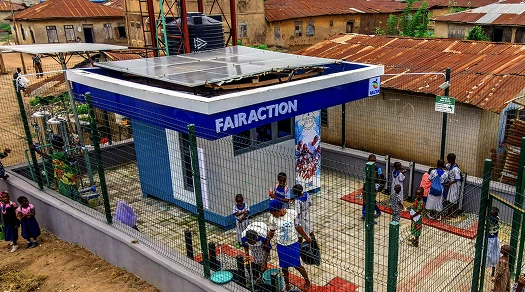
Each community on its own terms
Local conditions, governance, geography and patterns of past failure are read together before any solution is committed. The diagnostic work is grounded in a systematic review of the literature and the mapping of more than 1,700 communities, from which 265 sustainability challenges have been catalogued to drive the model's predictive logic.
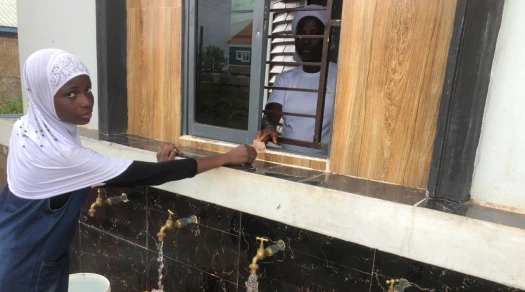
Services, not projects
Every deployment carries continuous performance learning embedded in it, treating implementation as the point at which evidence begins rather than ends. Five Smart Water Infrastructures are under continuous monitoring across more than sixteen metrics, each both a service for its community and a continuously updating asset to the model.
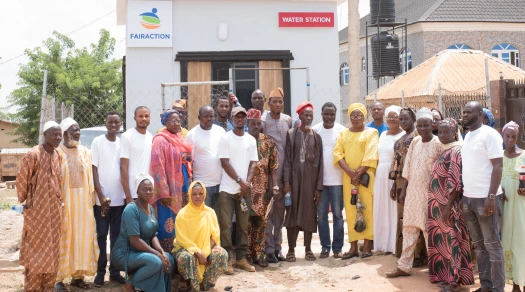
Every community makes the next one better
What works is held inside the model and used to expand the work, shared and adapted to new regions through frameworks, tools and partnerships. The underlying research has been published in six peer-reviewed international water journals and a doctoral thesis at the University of Technology Sydney, providing the external scientific review the model rests on.
This is the architecture by which FairAction turns the analytical claims in this article into a working system. Water service quality is the binding constraint on health outcomes; the way to deliver it at scale is a model that diagnoses each community correctly, implements with continuous learning embedded, and strengthens itself with every deployment. The evidence that it works is on the ground in Nigeria, accumulating in real time.[16]
What this means for funders
If you fund global health, this article is a case for where the money goes. The evidence points to one operational conclusion: the single most cost-effective contribution to SDG 3 outcomes in the communities that need it most is not another clinic, drug procurement round or vertical disease programme. It is sustained water service that keeps working in year three, year five and year ten.
- Treat water service quality as the binding constraint. SDG 3.2, on preventable child deaths, will not be met in sub-Saharan Africa on the current trajectory of WASH service delivery, and the gap will be measured in children's lives.
- Close the healthcare facility WASH gap. Around 1.7 billion people use facilities without basic water; the resulting maternal and neonatal deaths and resistance pressure are first-order failures of SDG 3.1. The monitoring infrastructure now exists; the funding must follow.
- Fund prevention, not parallel tracks. The NTD elimination agenda is structurally dependent on water infrastructure delivered at the same pace as the drug campaigns. Water-related disease prevention belongs in the same conversation as drug procurement.
- Back durable service, not one-off installations. The FairAction Model is built to deliver it: 4.7 years of continuous monitoring at Abeku, 100 per cent sustainability, 98.7 per cent reliability, across five Smart Water Infrastructures and a research base spanning 1,700 mapped communities.
The model is built to be adapted beyond Nigeria, to the other regions where SDG 6.1 is hardest to deliver and the health consequences of failure are highest. We invite donors, foundations and institutional funders who share this view to engage with us directly on how a sustainable service approach can be embedded in the programmes you support.[16]
References
- 1WHO and UNICEF Joint Monitoring Programme (2025). Progress on Household Drinking Water and Sanitation 2000–2024: Special Focus on Inequalities. WHO press release, 26 August 2025. who.int
- 2World Health Organization (2024). Sanitation fact sheet, 22 March 2024. who.int
- 3World Health Organization (2026). Child mortality (under 5 years) fact sheet. who.int
- 4UNICEF Nigeria. Water, Sanitation and Hygiene. unicef.org
- 5Prüss-Ustün, A., Wolf, J., Bartram, J., Clasen, T., Cumming, O., Freeman, M. C., et al. (2019). Burden of disease from inadequate water, sanitation and hygiene for selected adverse health outcomes. International Journal of Hygiene and Environmental Health 222(5):765–777. ncbi.nlm.nih.gov
- 6Institute for Health Metrics and Evaluation (2024). Diarrheal diseases remain a leading killer for children under 5, adults 70+. Global Burden of Disease 2021 results, Lancet Infectious Diseases, December 2024. healthdata.org
- 7World Health Organization. Diarrhoeal disease fact sheet, 7 March 2024. who.int
- 8World Health Organization (2025). Global report on neglected tropical diseases 2025. who.int
- 9World Health Organization (June 2025). Neglected tropical diseases further neglected due to ODA cuts. who.int
- 10WHO and UNICEF Joint Monitoring Programme. WASH in Health Care Facilities monitoring page. washdata.org
- 11WaterAid. Lack of water, toilets and hygiene leads to maternal health crisis. wateraid.org
- 12Hope, R., Ballon, P. (2019). Global water policy and local payment choices in rural Africa. npj Clean Water 2:21. nature.com
- 13WHO and UNICEF (2023). Water, Sanitation, Hygiene, Waste and Electricity Services in Health Care Facilities: 2023 Global Progress Report. UNICEF press release, 13 June 2023. unicef.org
- 14Elema, T. B., Negeri, A. A., Verstraete, L., Desta, A. F., Al-Mulla, T., Goyol, K., Baye, K. (2024). Water, sanitation and hygiene in selected health facilities in Ethiopia: risks for healthcare acquired antimicrobial-resistant infections. Frontiers in Public Health. ncbi.nlm.nih.gov
- 15World Health Organization. WASH and neglected tropical diseases. who.int
- 16FairAction International. How We Work. fairaction.ngo/about/how-we-work