
Solar powered
Operates independently of the electrical grid, improving reliability and sustainability.

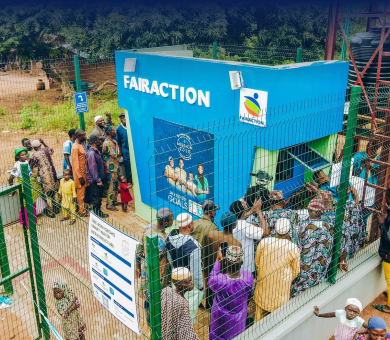
Nigeria is a sleeping giant. 46% of its water projects have failed, and 40M+ of its people lack basic drinking water. We do not accept this.
FairAction Nigeria is turning research, community engagement and Smart Water Infrastructure into measurable progress toward clean water for all Nigerians.
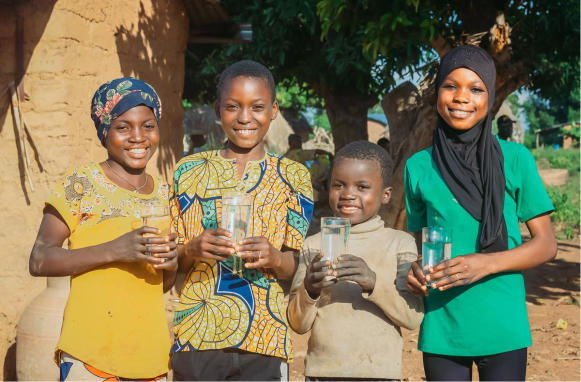
What we believeWe believe water is more precious than gold: the essential ingredient of life, culture, history and future. Every child on our planet should have sustainable access to safe drinking water.
We are driven by a simple conviction: bringing safe water to communities in extreme water poverty is the foundation for breaking the cycle of all poverty.
When a water project finally arrives, hope arrives with it. Too often it fails within the year, and families pick up their jerrycans and walk back to the contaminated stream they were promised they had left behind.
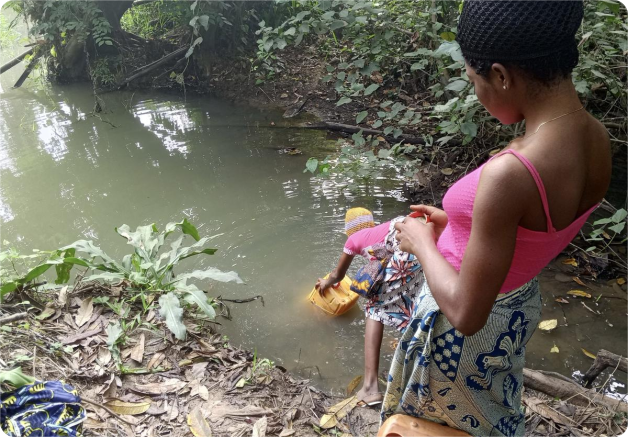
Our extensive field mapping shows the evidence of this suffering and extreme water poverty:
And beyond safely managed water, around 400 million people in sub-Saharan Africa live without even basic drinking water, an improved source within a 30 minute round trip. More than 40 million of them are Nigerian.
Source: WHO/UNICEF Joint Monitoring Programme, Progress on Household Drinking Water 2000 to 2024 (2025 report); World Bank Africa water brief, 2024 data; Nigeria figure: UN-Water SDG 6 data portal (30% safely managed, 2024).
Each figure is one million Nigerians living without basic drinking water.

people in sub-Saharan Africa without basic drinking water is Nigerian. On JMP estimates, Nigeria stands among Africa's top three, behind Ethiopia and DR Congo, and its unserved population alone outnumbers the entire population of Australia.
Ethiopia, DR Congo, Uganda, Tanzania and Nigeria figures as published (UNICEF, UNEP, WHO/UNICEF JMP); values marked ~ are approximate, derived from JMP coverage rates, and the ranking is indicative.
Source: Foster, Furey, Banks & Willetts (2019), Functionality of handpump water supplies, International Journal of Water Resources Development. Nigeria figure: JICA national inventory, 25,470 handpumps across 35 of 36 states.
Extreme water poverty is linked to every other form of poverty: education, income, health and equality, and through them to life expectancy and the Human Development Index itself. The chart below shows what those compounding deprivations have done to Nigeria over the years, against the countries that once led the table.
1990: extreme poverty is an Asian story. China and India dwarf everyone. Nigeria is far down the table.
Annual values are smoothed between published anchor points; the 1990 (China, India), 2011 (India), 2018 figures, and the 2024 figures for Nigeria, DR Congo, Ethiopia, Sudan and India, are as published or derived from published shares; other years are approximate World Bank estimates. The international extreme poverty line was updated from $1.90 to $2.15 a day across this period. Sources: Brookings Institution (2022, 2018) based on World Poverty Clock; World Bank, Africa's Pulse, April 2025; World Bank, India Poverty and Equity Brief, 2025.
spent by women and girls collecting water, every single day. Time taken from school, work and income.
UNICEFevery dollar invested in water and sanitation returns around four dollars in economic productivity.
World Health OrganizationNigerian children under five die every year from diarrhoeal and water-borne disease; 73% of that burden is tied to poor water, sanitation and hygiene.
UNICEF NigeriaNigerians below the national poverty line in 2025, up from 81 million in 2019. Water access is one of the deprivations that define it.
World Bank, Nigeria Development Update 2025Safe drinking water is not welfare spending; it is economic infrastructure. Restore water, and you restore the two inputs every income depends on.
The World Water Map is built and hosted by Essential Need, our long-standing technology partner, tracking water access and human development across the globe. This link opens the Essential Need website.
Extreme water poverty persists in Nigeria because of sustainability challenges that have never been solved. So we spent years solving them, working alongside government departments, international organisations, research institutions, universities and local experts to build a solution that, with support, can achieve clean water for all Nigerians.
Billions have been invested in Nigerian water infrastructure, but too little in making sure water keeps flowing after commissioning. From years of work in the field, in communities and in research, we identified 265 sustainability challenges across six critical factors:
A water project that does not address all six is a project waiting to fail. Below are examples of these challenges, and how our model answers each:
No one can site, prioritise or maintain what has never been mapped. Planning without community-level evidence is guesswork, and guesswork is what keeps failing.
We map communities one by one: their people, their existing sources, their failures. That evidence decides where systems are sited, which sources are repaired first, and where investment serves the most people.
Infrastructure is installed, commissioned and walked away from. Nobody studies why the last project failed before building the next one, so the same failures are rebuilt, community after community.
We pilot real systems in real communities, then keep measuring them for years after construction. That evidence became our sustainability framework, which guides every water project across its whole life, and each new project feeds fresh field data back into the system. Through our iterative research cycle, every single project is a knowledge contributor, making the next one better.
Government, donors and communities work in silos, and the result is aid overlap: a community that already has a water solution designed to be paid for and sustained can be handed a second, free source. The free source pulls users away, leaving the sustainable system underutilised, while the free source itself, with no revenue for maintenance, drifts toward disrepair, leading to the collective failure of all systems: a huge sustainability challenge.
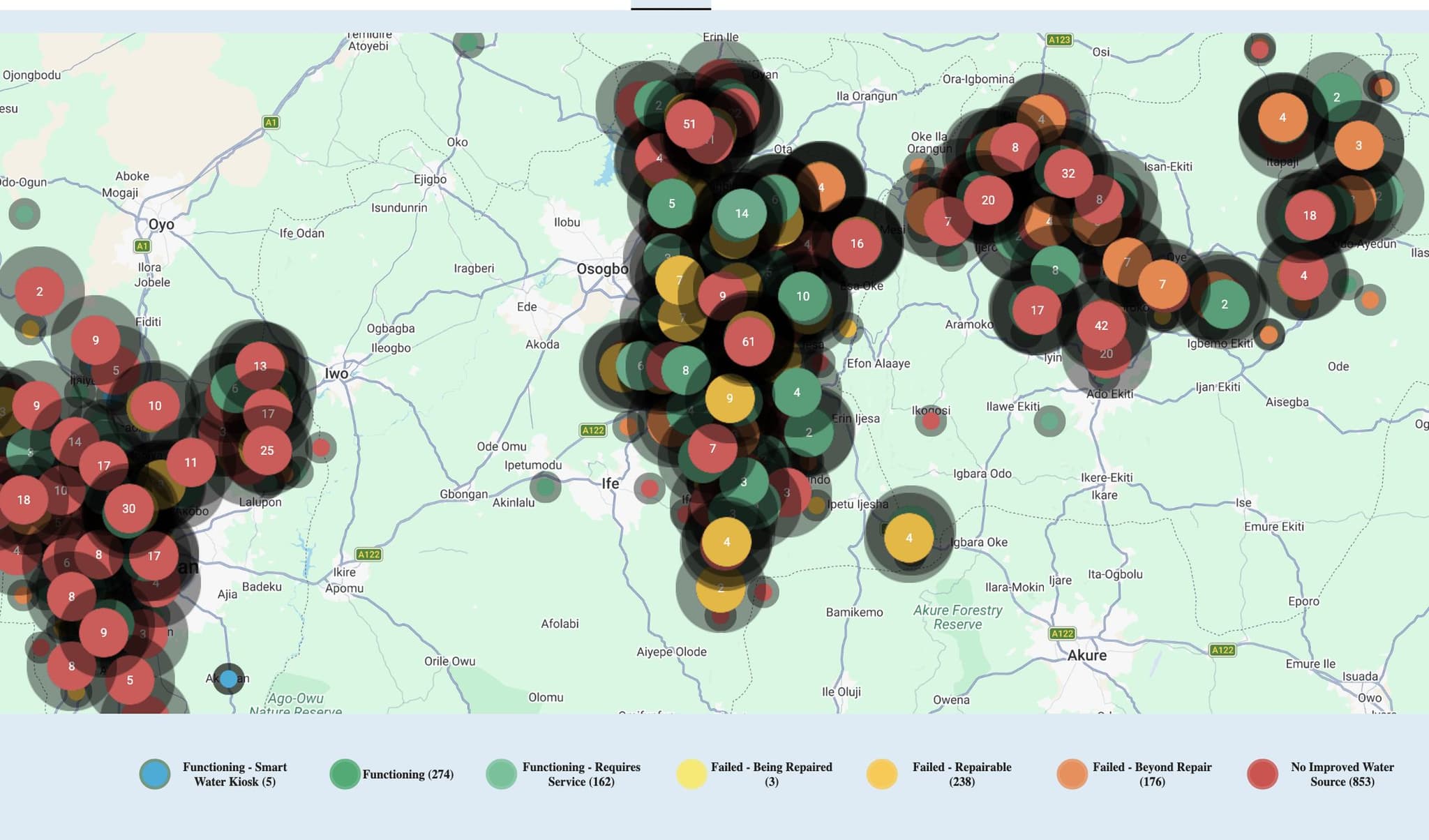
Every project runs on the Target 6.1 Map, our digital water infrastructure. It shows the actual on-ground reality: where water is functioning but not designed to be sustainable, where sources have failed, and where there is no source at all and people are suffering. That live picture enables comprehensive planning, ensuring projects are delivered where they are needed most. And because every system is tracked continuously, maintenance is proactive and reliability stays above 97.1%.
Most systems are built, commissioned and left alone, with no monitoring and no fund for repairs. Faults are found only when the water stops, and with nothing set aside to fix them, the first breakdown is often permanent. The community returns to unsafe sources.
Every live system streams real-time longitudinal data. Faults are detected in real time and fixed proactively, and we predict the failure rate of system components so they are replaced before they fail. Water sales, at an affordable price set by the community itself, fund that maintenance, so each system becomes financially self dependent.
All 265 sustainability challenges we identified are addressed and condensed into one framework.
Every identified challenge has been systematically addressed and condensed into the sustainability framework that underpins how we work. Through our iterative research cycle (map, build, measure, publish, improve) the framework continuously improves: every new project strengthens it with new knowledge, and makes the next one better.
See how we work to deliver sustainable water solutions ⟶Opens on the FairAction International site, where our shared framework is documented.
Most water projects fail because of what happens before construction and after it. Our framework covers all three phases, with public evidence at every stage.
See the crisis before we build. The map below presents the 1,700+ communities of our first mapping across Oyo, Osun and Ekiti States. Our ongoing improved mapping has since covered a further 2,020 communities, taking the total to 3,700+ communities mapped and 8,052 public water sources evaluated.
Explore the map below. It is colour coded, with each colour representing a community’s current water condition. Our goal is to turn every mapped community blue: the status of a smart solution built to be sustainable.
Construction starts with people: community engagement, then architectural design, then the build. Three to four months from borehole to flowing water.
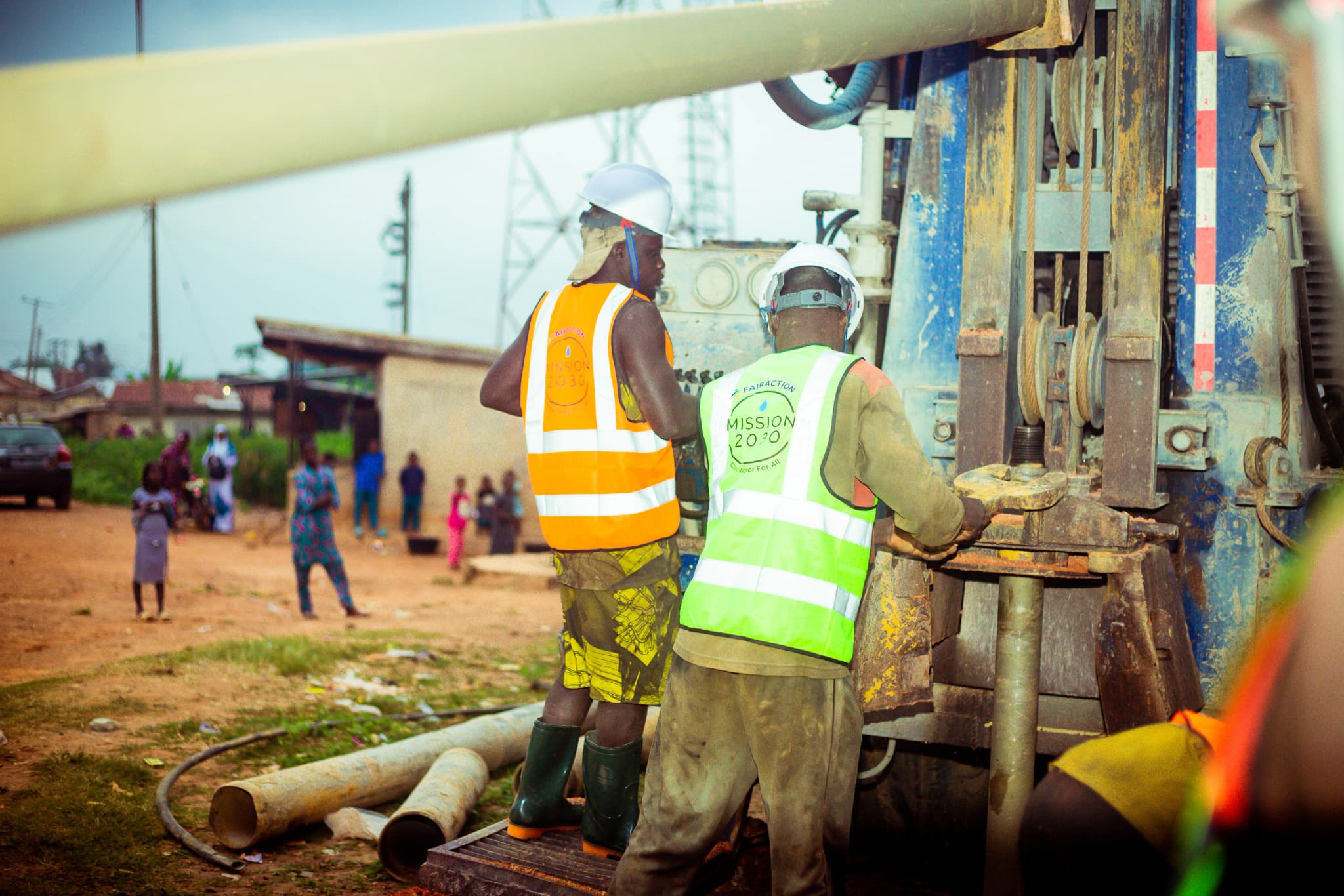
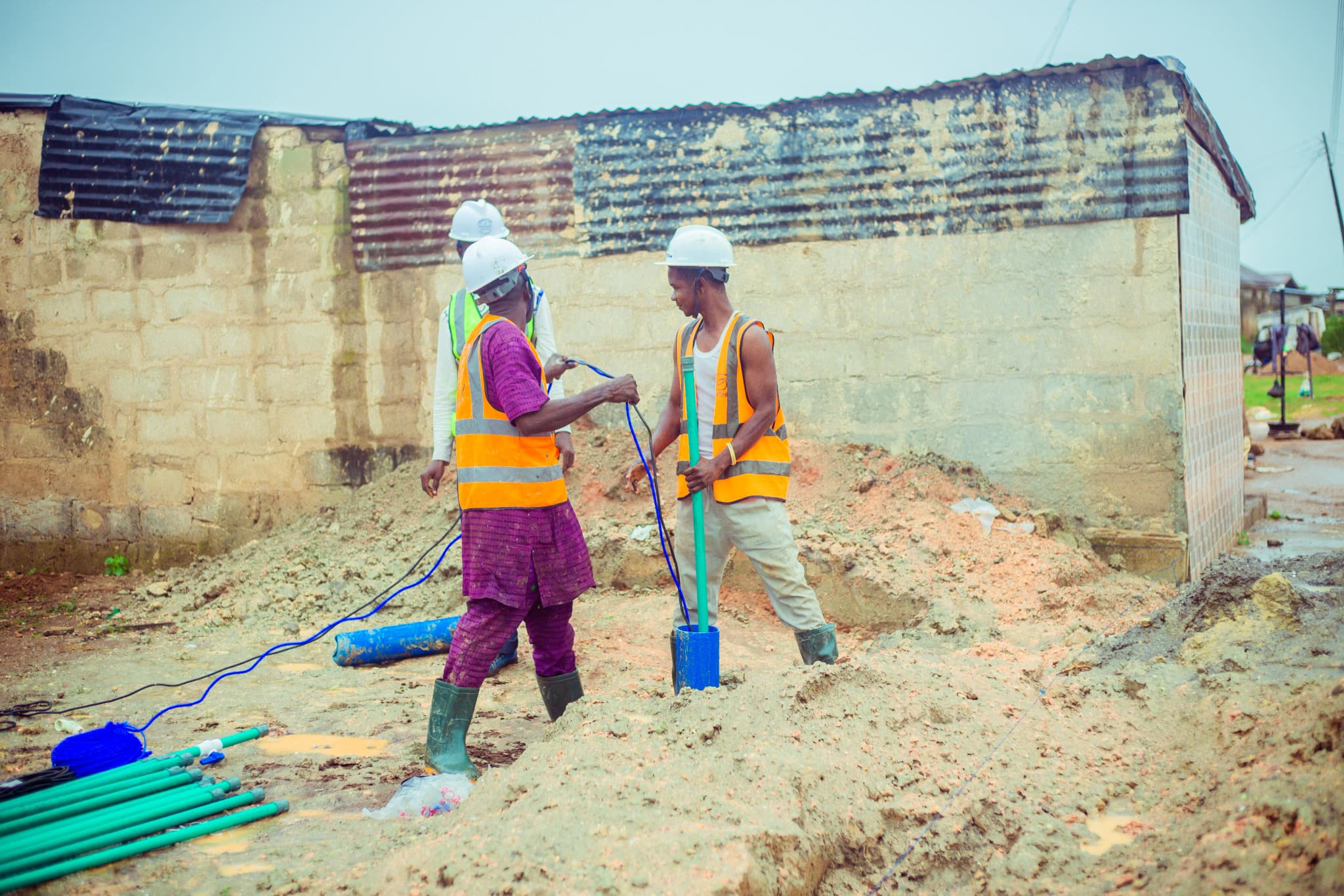
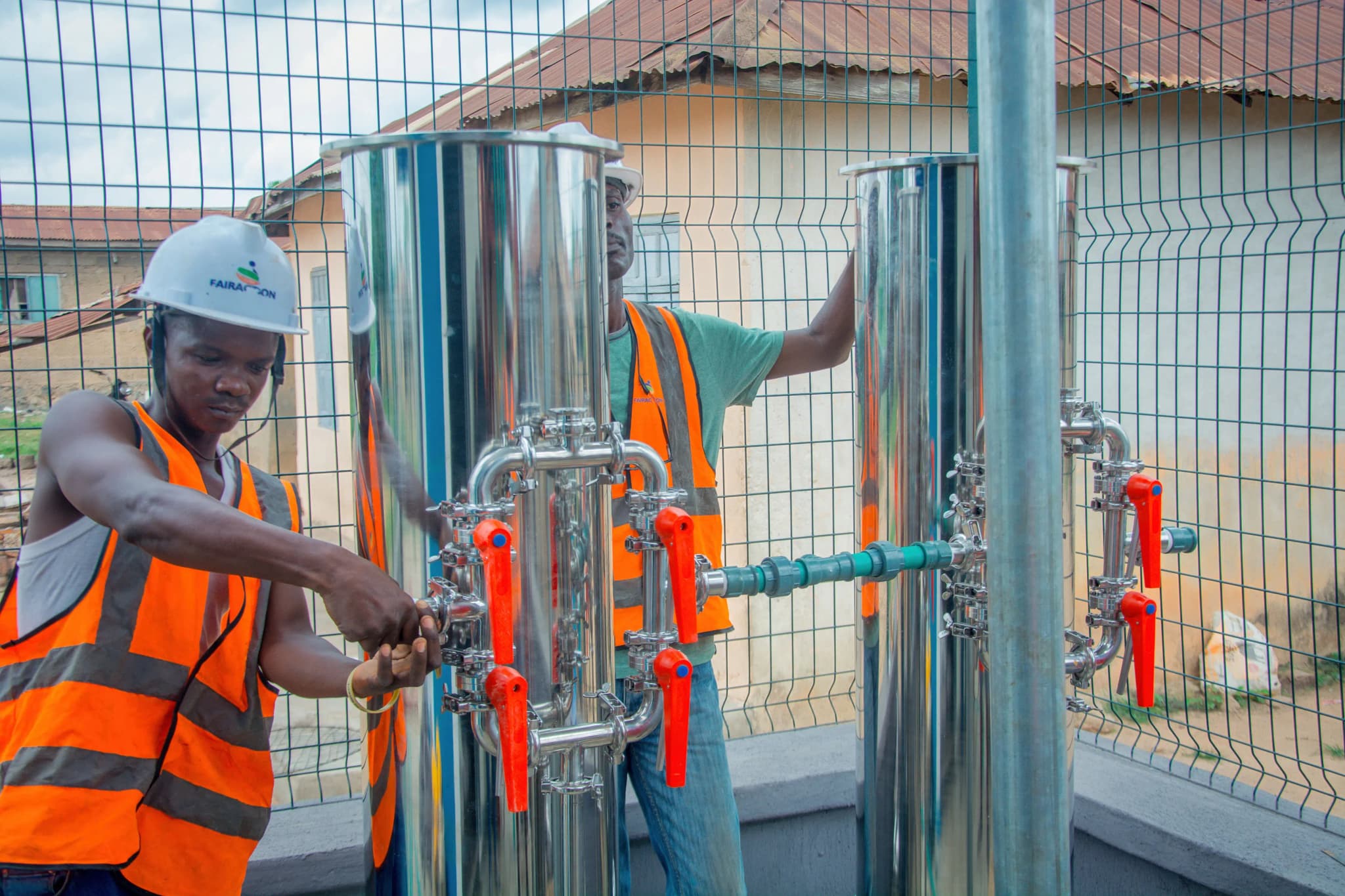
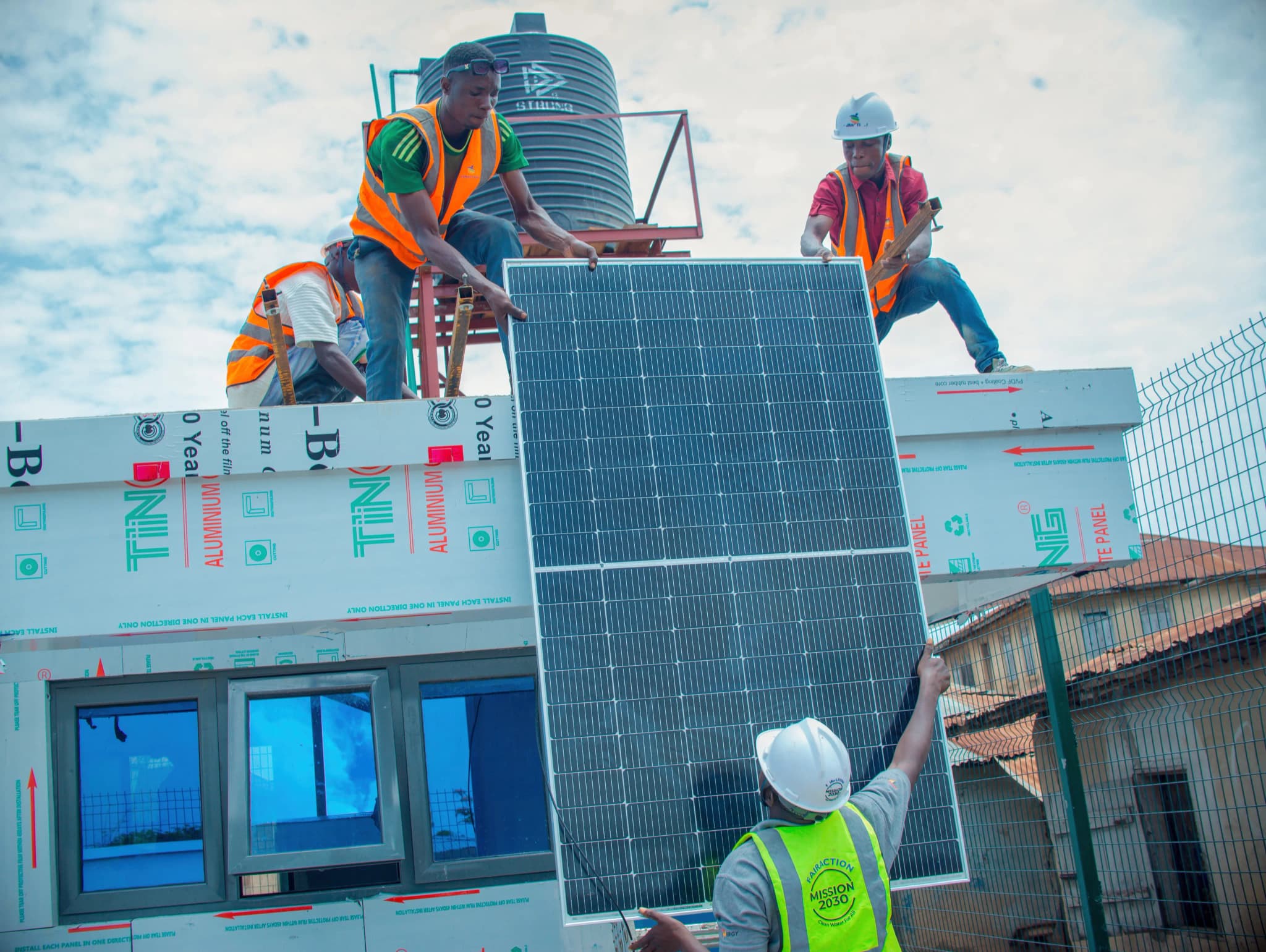
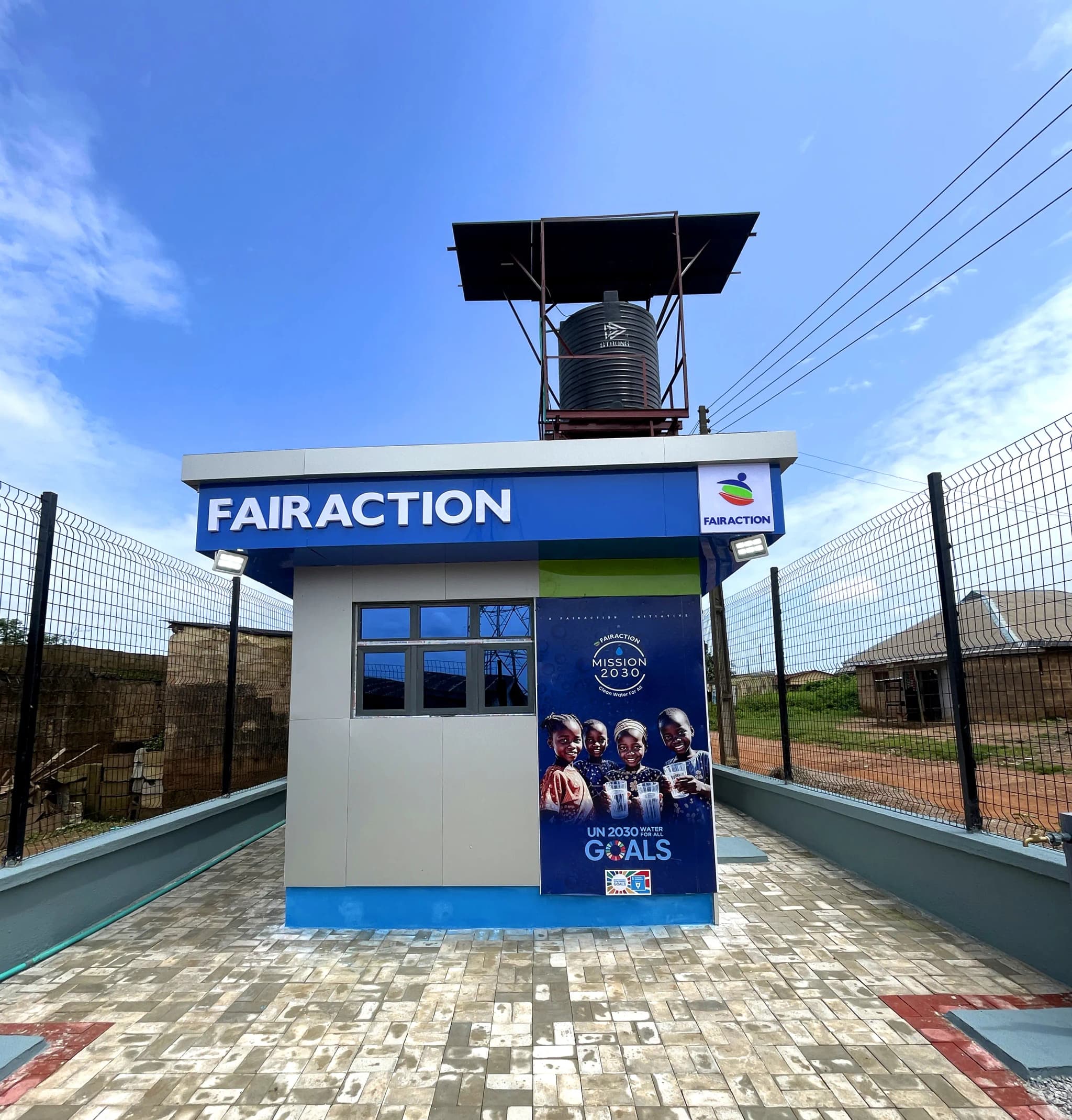
Operates independently of the electrical grid, improving reliability and sustainability.
Built-in IoT watches the kiosk in real time, feeding its public data page and sharpening every future build.
Our own innovation for places with no reliable internet: the meter verifies water use by image, so even off-grid communities report real, trusted data.
A minimum reliability rate of 97.1%, operational for at least 1,063 days out of 1,095.
An on-board treatment plant, tuned to the local water quality, delivers water that meets UN and national standards.
Produces at least 20,000 litres of water a day, capable of serving up to 1,000 people.
Built to last 20 to 50 years, providing enduring support to communities.
Daily attendant checks, plus software that predicts faults before they cause downtime.
Positioned within community clusters for the easiest possible access.
Built with sustainable materials to minimise environmental impact.
Every live system streams real-time longitudinal data, tracking 16 metrics per borehole (download a sample ⟶), so maintenance is proactive and every lesson improves the whole system. Communities and people continue to benefit, and project reliability across all communities stands above 97.1%.
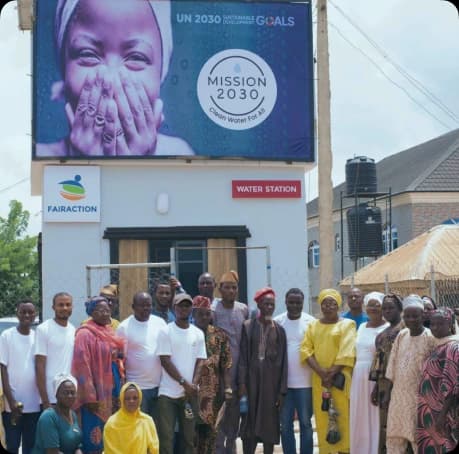 Abeku CommunityProject IDSWI1-NG-OY-1353 ⟶
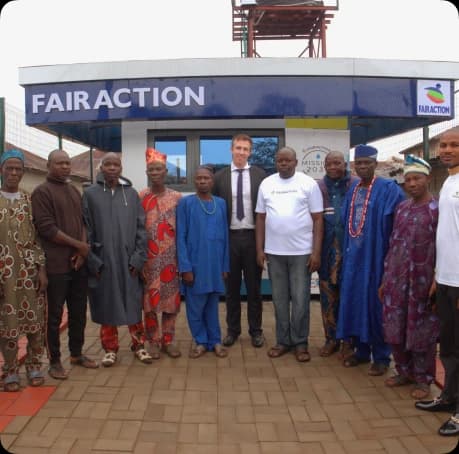 Isale-Oja CommunityProject IDSWI2-NG-OY-1567 ⟶
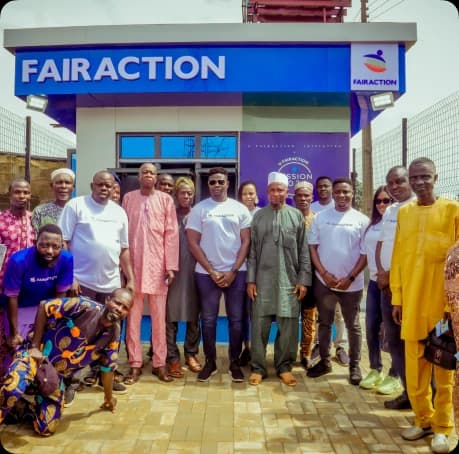 Alabata CommunityProject IDSWI3-NG-OY-1530 ⟶
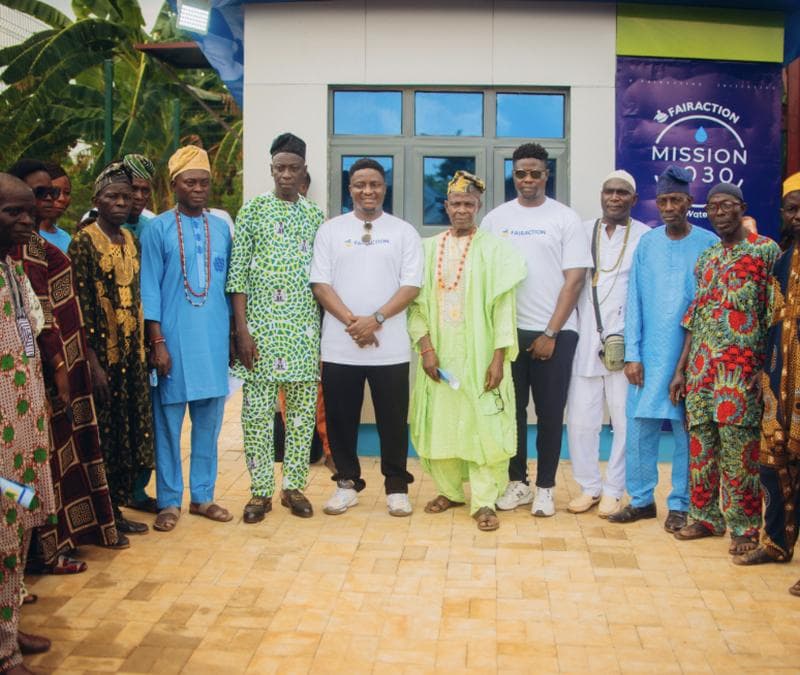 Aba Apapa CommunityProject IDSWI4-NG-OY-1756 ⟶
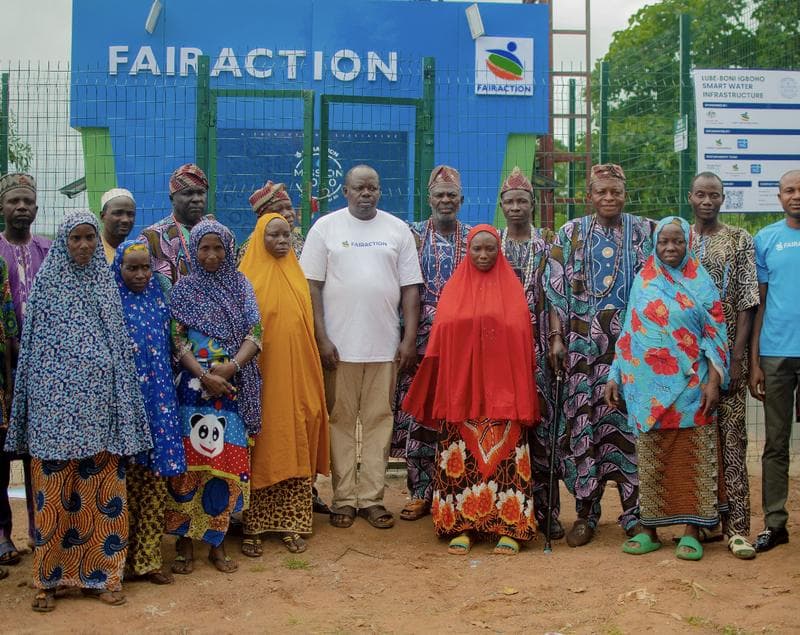 Boni, Igboho CommunityProject IDSWI5-NG-OY-1760 ⟶
We have mapped the communities and built the framework that keeps every project sustainable. Support our work ⟶
FairAction International and FairAction Nigeria
Clean Water for All Pty Ltd
Essential Need Projects Limited
Every gift funds the mission: safe, sustainable water for Nigerian communities.
Account 1 · Access Bank
Account 2 · Parallex Bank
Wire transfer · Access Bank PLC
Donate securely via our official GoFundMe campaign and help fund a community's water project.
The 100% promise
In line with the FairAction International 100% Promise, every online donation received goes entirely to sustainable water projects, never to overheads.
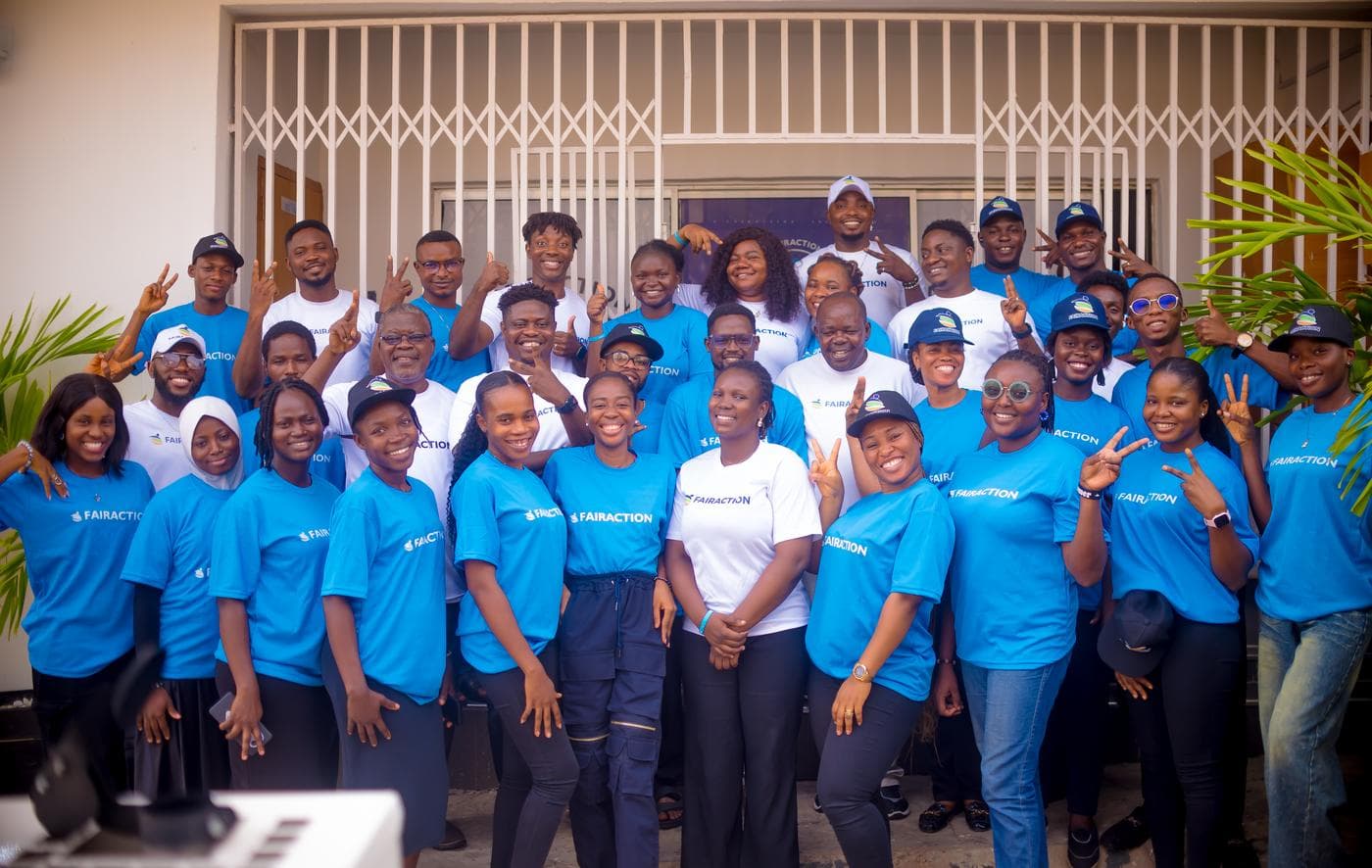
FairAction operates a combined team: our Nigeria team working as one organisation with FairAction International. Everyone behind this work is listed on the FairAction team page.
No single organisation can achieve clean water for all alone; that is why Partnership for the Goals is the seventeenth Sustainable Development Goal. The partners, supporters and affiliations below give us the funding, technology, expertise and reach to deliver sustainable water solutions.









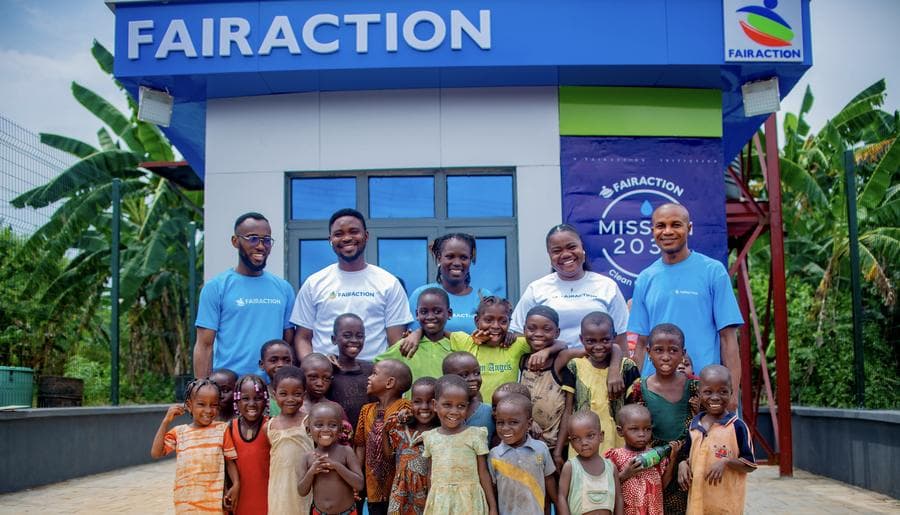
Project launches, community testimonies, TV features and engagements, straight from the field.
Read more ⟶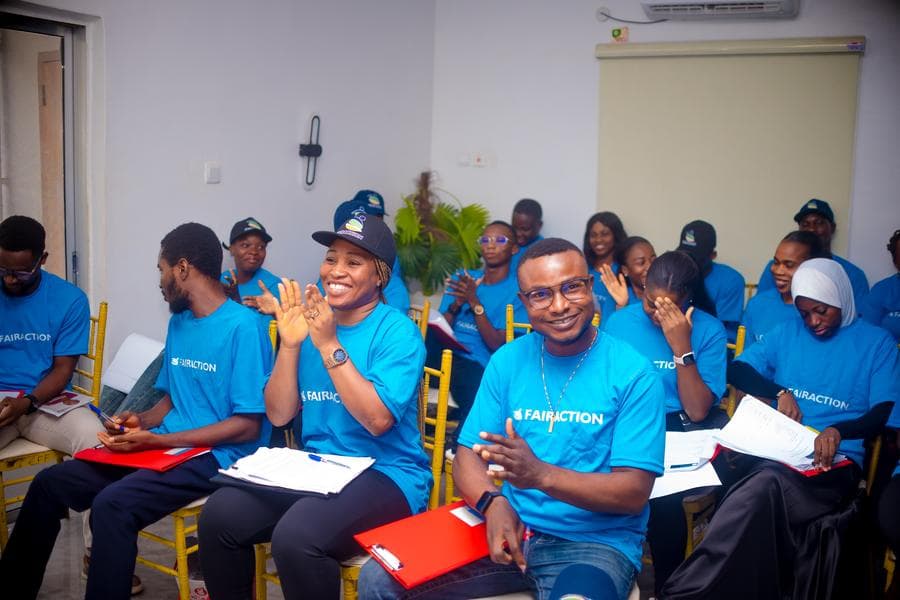
The peer-reviewed research behind our framework, published in international journals.
Read more ⟶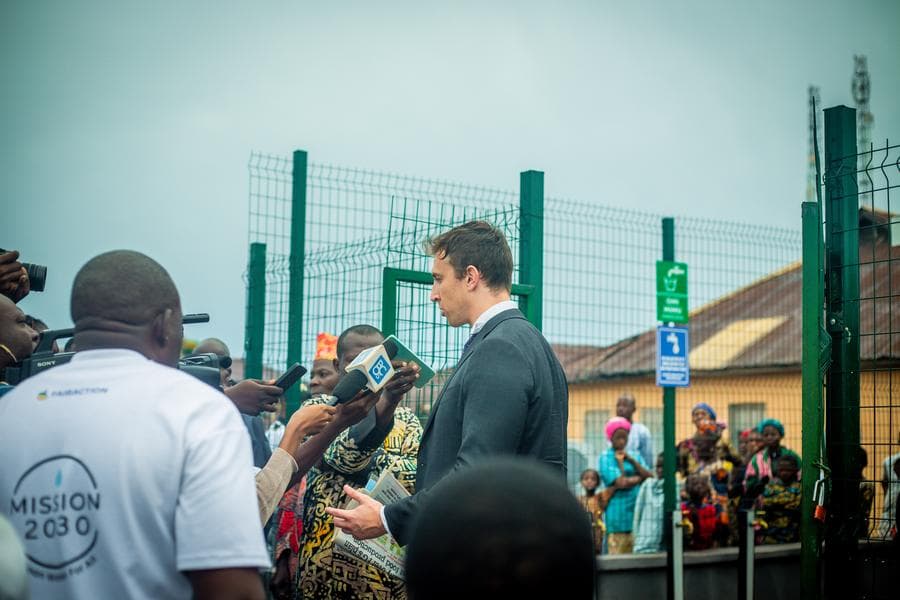
Field stories, research notes and updates from the FairAction network.
Read more ⟶Safe drinking water is Sustainable Development Goal 6, and it advances nearly every other goal: it prevents disease, keeps children, especially girls, in school, returns productive hours to women and families, and lifts communities out of poverty. Supporting clean water is the single most effective way to advance them all. Here is how you can support us:
Sponsor a water project, partner with us, or bring your own way to help. Email us today at partnership.ng@fairaction.ngo.
Visit our office HQ.
No 34B, Ladoke Akintola Street, Favors Awolowo, Old Bodija, Ibadan, Oyo State.
 The Federal Government of Nigeria
 Corporate Affairs Commission