
When Relief Turns Fatal: Why Sustainable Water Solutions Matter
Written by Sam Adeoti, CEO at Fairaction
Key Takeaways
- Unsustainable water projects can harm communities when they fail without maintenance, monitoring, financing, and accountability.
- Failed water projects can push families back to unsafe water, increasing health risks and deepening vulnerability.
- Sustainable water solutions require more than infrastructure. They need diagnostics, implementation, monitoring, lifecycle management, and long-term service models.
- Fairaction builds lasting safe water access through evidence, implementation, digital monitoring, lifecycle management, and sustainability frameworks.
- Donors and funders can protect lives by funding the full chain that keeps water services working.
7 min read
How Failed Water Projects Affect Communities
 ---
---
Most failed water projects are described in the language of broken pumps, poor maintenance, or wasted funding, but that language is far too soft. In communities living with severe water poverty, an unsustainable water project can do far more than fail: it can push people back towards danger, deepen vulnerability, place the burden back on women and girls, and in the worst cases, contribute to illness and death.
This is why sustainable water solutions must be judged not by installation alone, but by whether they continue to protect lives over time. The issue is not simply whether a borehole was drilled or a pump was installed. The real test is whether safe water access remains reliable long after the launch moment has passed.
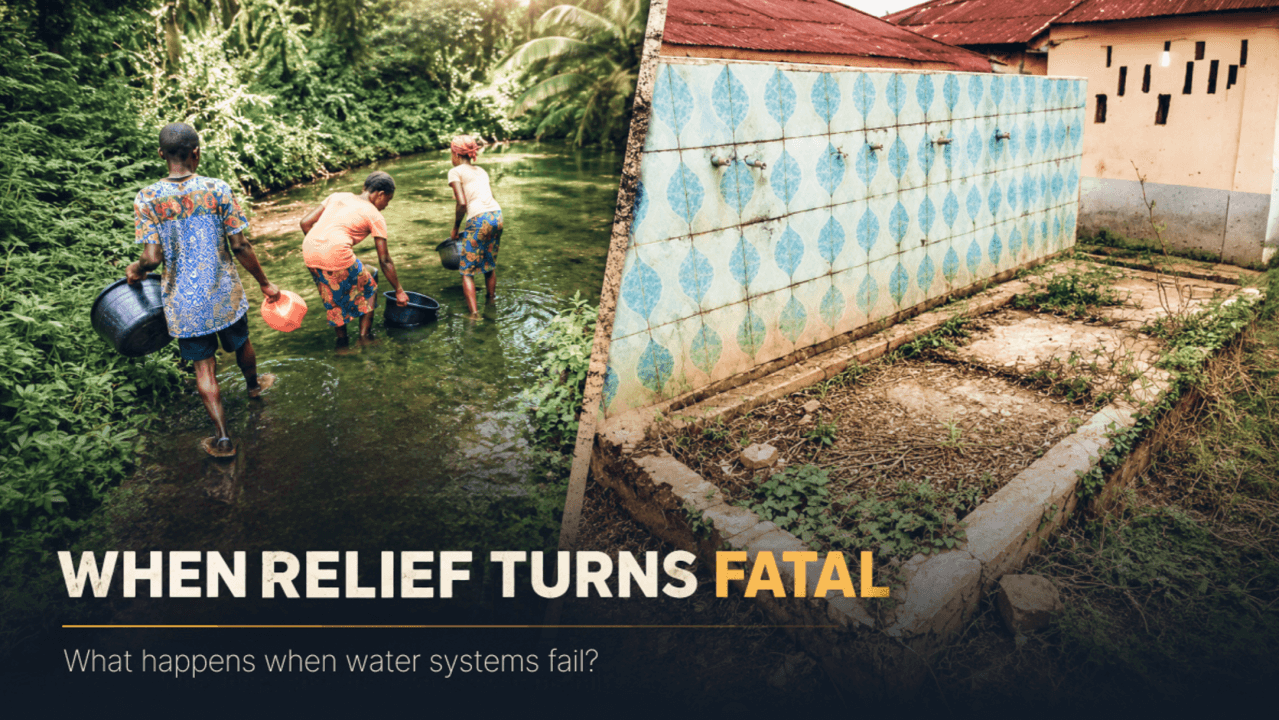
That is the reality behind a question I asked years ago: if your only choices for drinking water were a greenish stream or a broken borehole, which would you choose? For many people, this is not a provocative question. It is everyday life.
During Fairaction’s water poverty mapping across more than 1,700 communities in Nigeria, we encountered this brutal pattern again and again. Women and girls walked long distances to streams and other unsafe sources, animals used the same water, contamination was visible, and the risk was obvious. Yet when there is no alternative, people drink what they can find. Bara is one such community, and readers can view its profile on our Target 6.1 map.
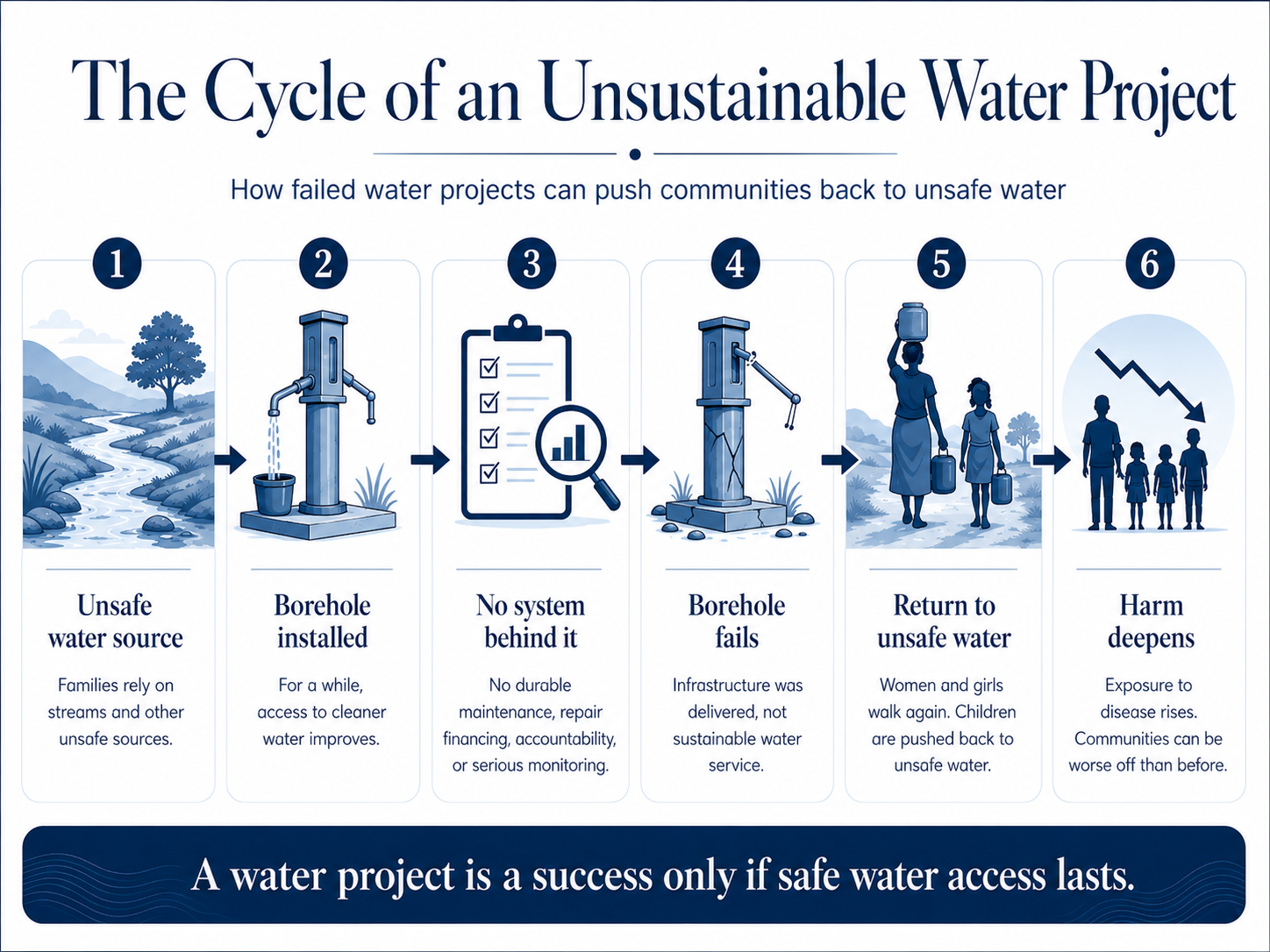
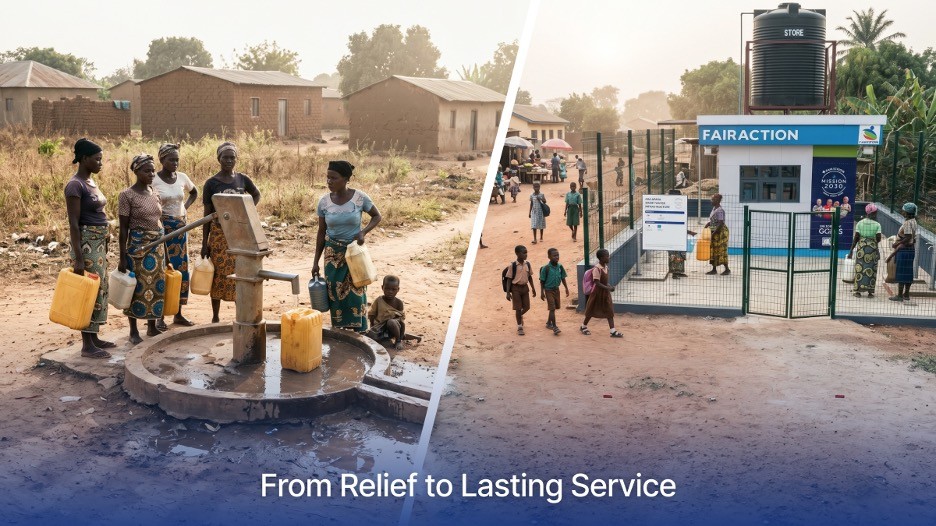
In some communities, relief appeared when a borehole was installed. For a while, life improved: families could access cleaner water, women and girls regained time, physical stress eased, and the project was counted as a success. But too often, that success was temporary.
Within a few years, the borehole would stop functioning. When the borehole failed, the community often had no system behind it:
no durable maintenance structure
no long-term operating model
no embedded accountability
no adequate repair financing
no serious performance monitoring
What had been delivered was infrastructure, not sustainable water service.
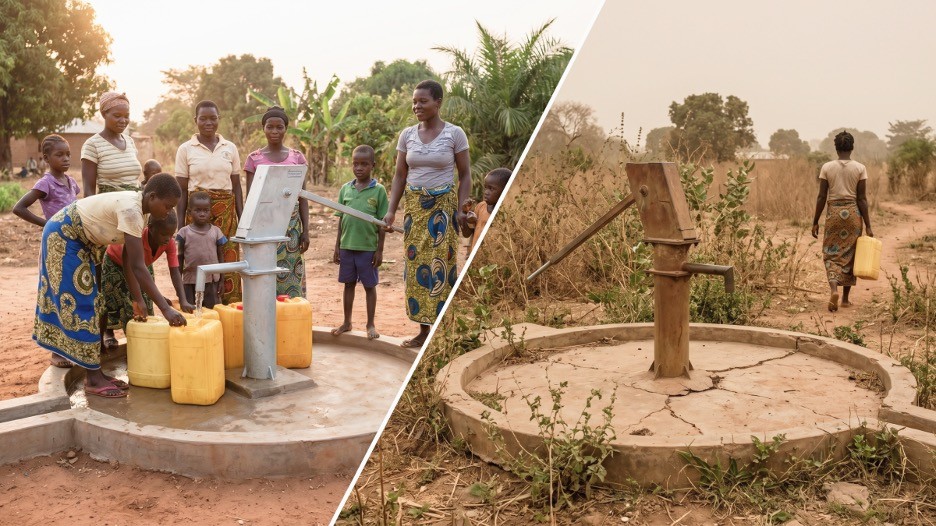
That distinction matters because a water project is not like many other interventions. When some forms of direct relief aid end, the benefit may stop, but the intervention itself does not usually leave behind a failed system that pushes people into a more dangerous daily reality than before. Water is different. When a water project fails, it can restructure everyday life for the worse by sending women and girls back onto long, exhausting journeys, pushing children back to unsafe water, and increasing exposure to disease.
There is also a part of this failure that is rarely discussed. While the borehole was functioning, the stream people once depended on had often been neglected. Vegetation thickened, animal activity increased, and water quality worsened. So when the borehole failed, people were not returning to the same source they had once known; they were returning to something even more dangerous.
This is why unsustainable water projects can be so destructive. They do not simply collapse. They can leave communities worse off than before.
---
Installation Is Not Impact: Why Water Projects Need Long-Term Service Models
Why Lasting Water Services Matter
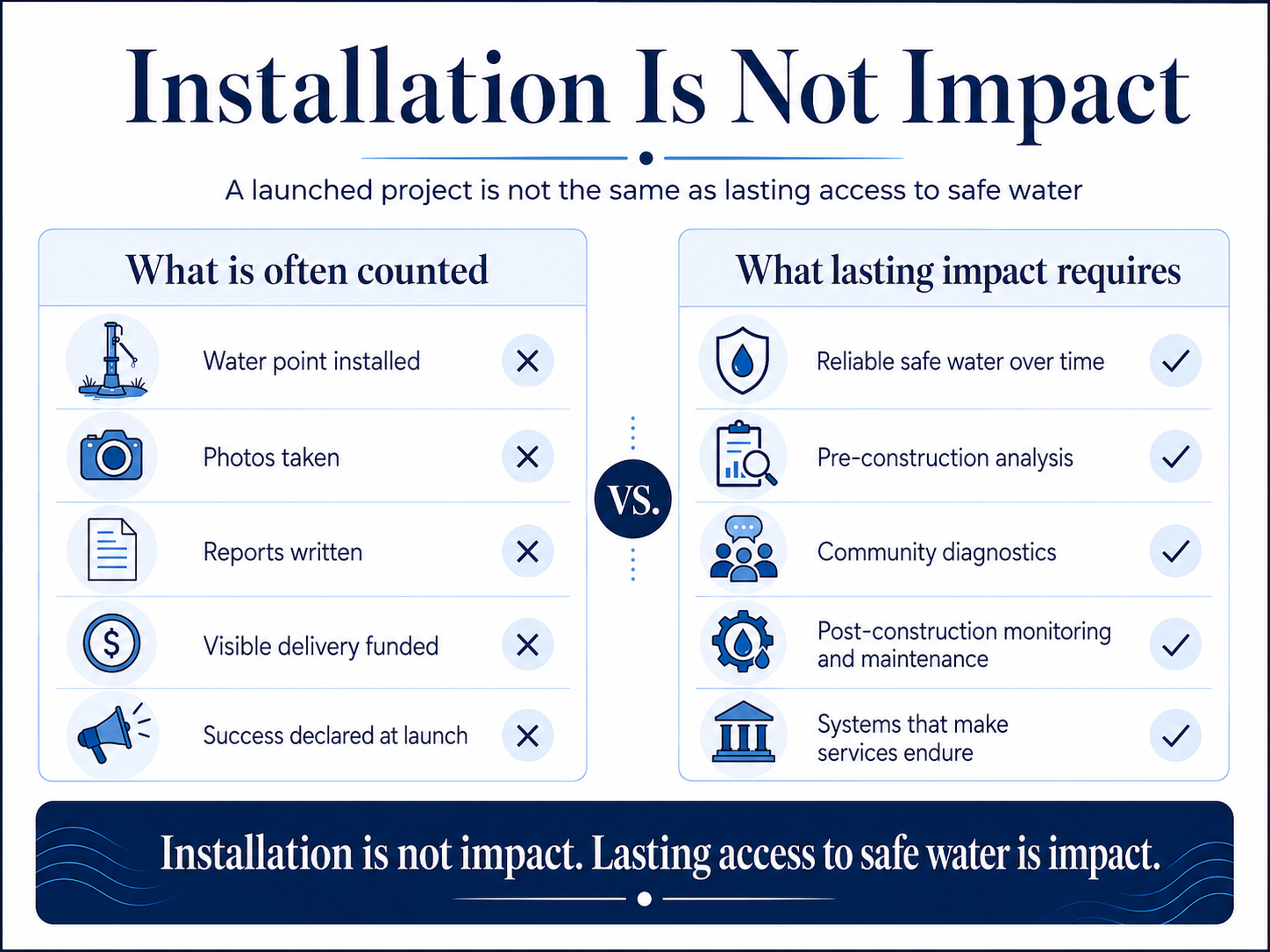
This is also why I have become increasingly uncomfortable with how the development sector often defines success. A water point is installed, photos are taken, reports are written, and the intervention is declared successful. But installation is not impact. A commissioned water project is not the same as lasting access to safe water, and a project is not a success because it worked for a moment. It is a success only if it continues to protect lives over time.
This is not an argument that NGOs, donors, or grantmakers lack good intentions. Good intentions are not the problem. The deeper issue is how success is measured, funded, and celebrated. Too often, the system rewards what is visible, immediate, and easy to attribute. People understandably want to know exactly what their money funded, which borehole was drilled, which pump was installed, and which community received support. That creates a powerful feel-good factor around visible delivery.
Installation is not impact. Lasting access to safe water is impact.
The Importance of Post-Construction Monitoring
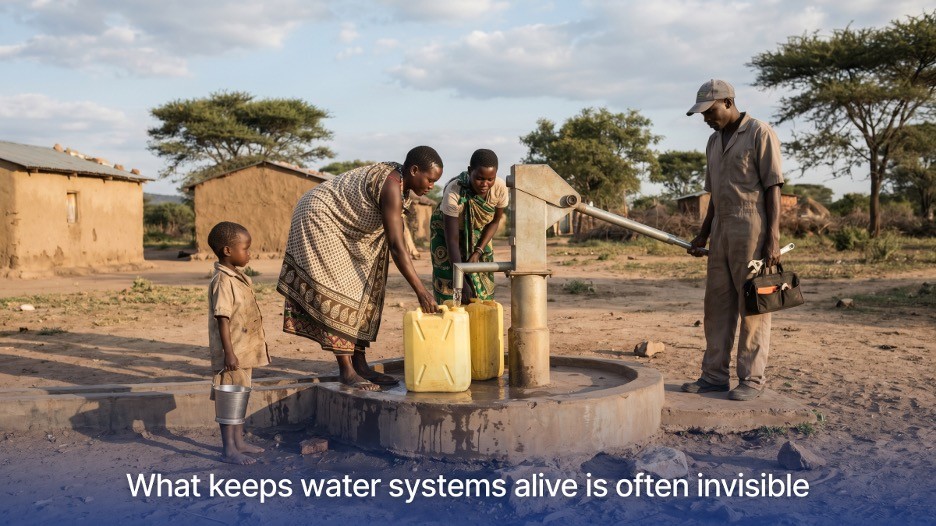
The foundations of lasting impact are often less visible and therefore harder to fund. Pre-construction analysis is harder to photograph, community diagnostics are harder to package, and post-construction monitoring and maintenance do not always feel like headline impact. Yet these are often the very things that determine whether the water service survives.
Too often, these activities are treated as overhead. In reality, they are part of the impact. If we continue to fund what looks good in the short term while neglecting what makes services endure, we will keep reproducing the same cycle of hope, breakdown, and harm.
---
Fairaction’s Approach to Sustainable Water Solutions
From Infrastructure to Sustainable Water Service
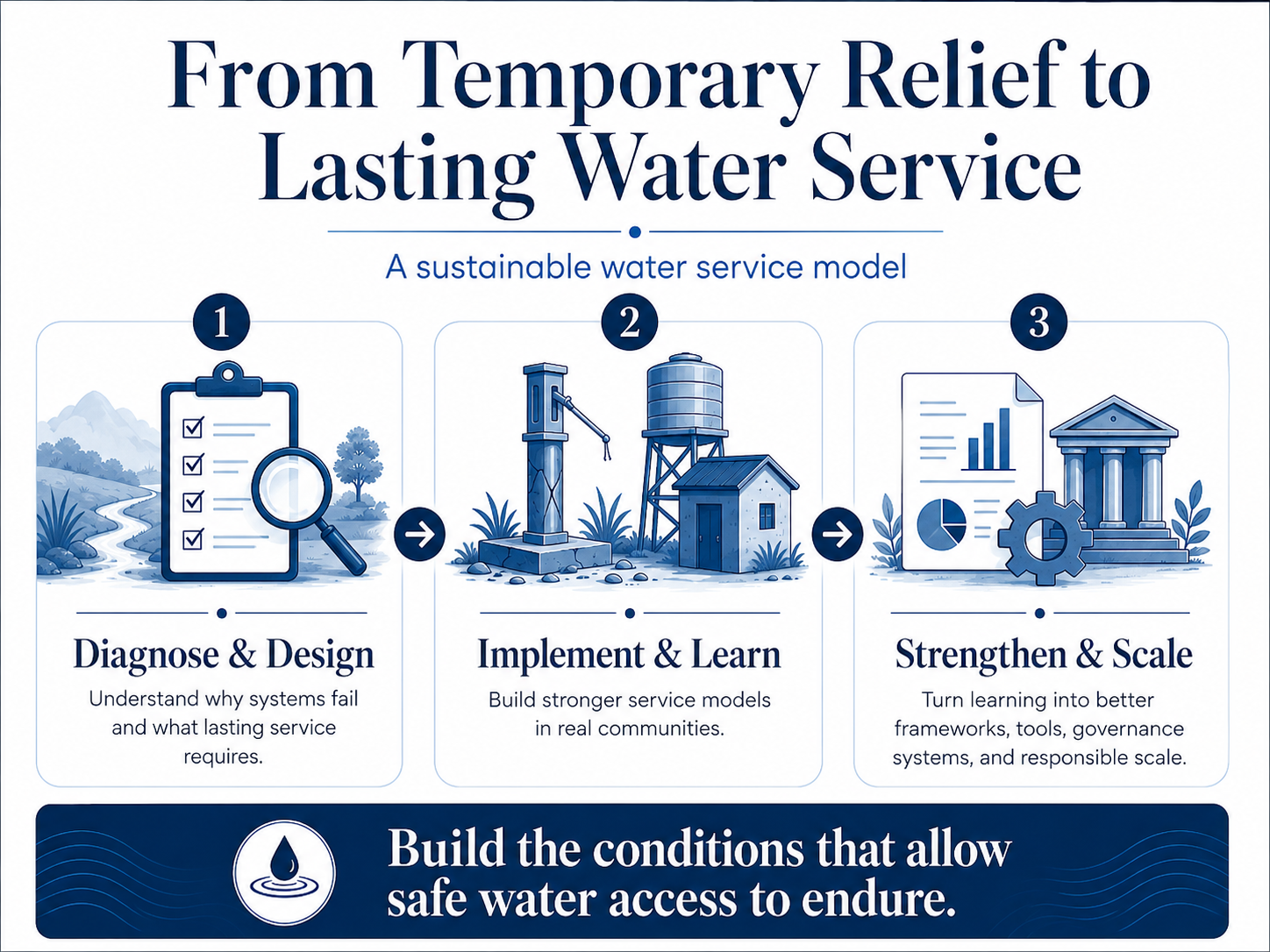
This is the gap Fairaction exists to close. We do not approach water access as a one-off construction exercise; we approach it as a sustainability challenge. Our model is built to close the gap between water investment and lasting water service by doing three things together: diagnose and design, implement and learn, then strengthen and scale.
In practice, that means we work to understand why systems fail, build stronger service models in real communities, and turn that learning into better frameworks, tools, governance systems, and responsible scale. The aim is not only to deliver a project, but to build the conditions that allow safe water access to endure.
Smart Water Management and Community Accountability
This means asking harder questions from the beginning. Not just, can infrastructure be installed here? But what will make this service last? What technical, social, financial, governance, environmental, and operational realities must be addressed? How will performance be monitored? How will accountability be maintained? What happens after installation? Who is responsible when things start to slip?
These are not side questions. They are the difference between short-lived relief and lasting service. For donors and partners, this means funding not only water infrastructure, but the systems that keep safe water flowing.
For those considering how to support this work, the real choice is clear. You can fund projects that look successful at the point of delivery, or you can support a model built to ensure that water remains safe, reliable, and sustainable long after the launch moment has passed. The second path is harder to photograph, but it is the one that protects lives over time.
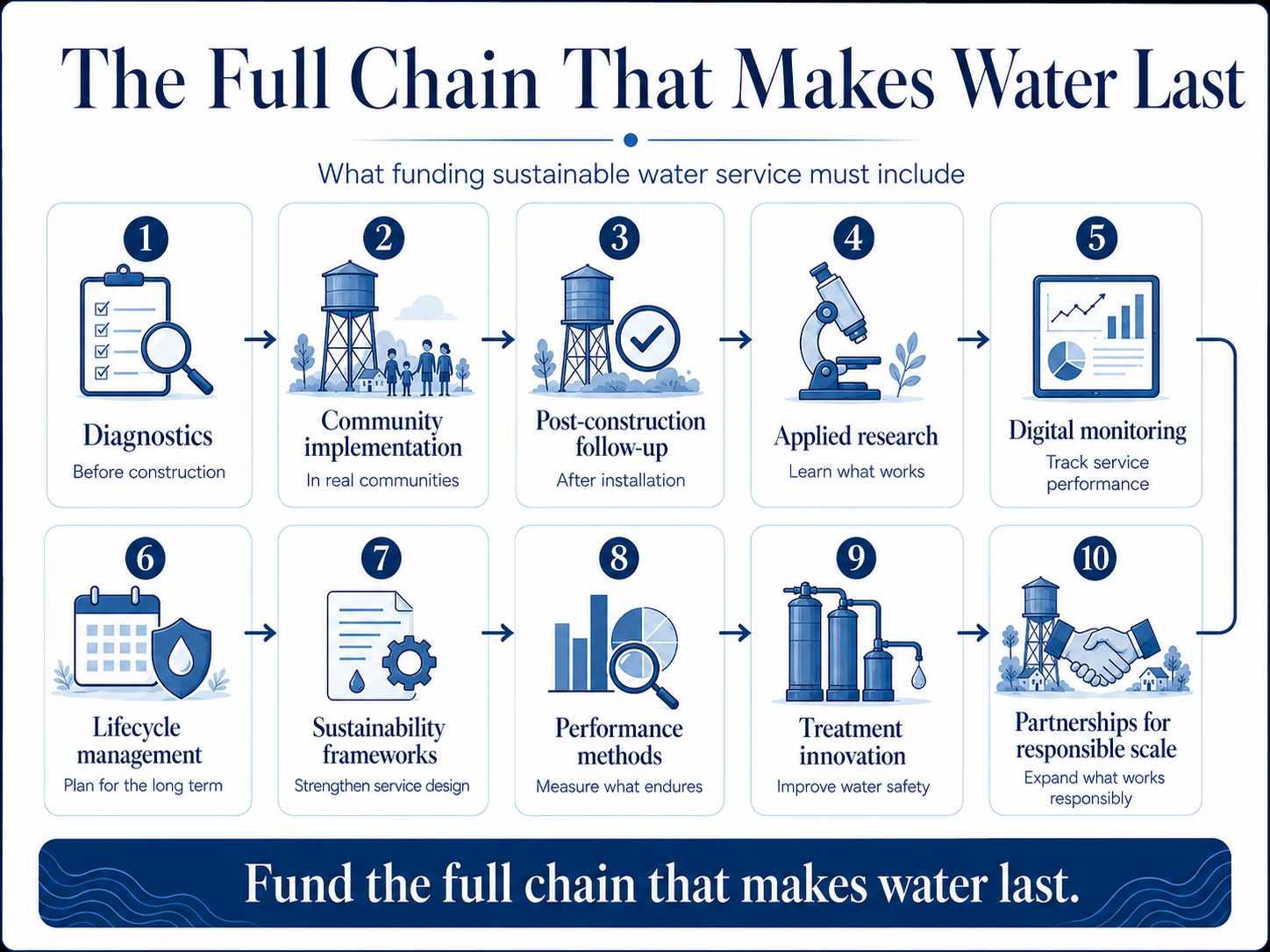
That means funding the full chain that makes water last: community implementation, post-construction follow-up, applied research, digital monitoring, lifecycle management, sustainability frameworks, performance methods, treatment innovation, and the partnerships needed for responsible scale.
---
Why SDG 6.1 Requires More Than One-Off Projects
Achieving SDG 6.1 is ultimately a national responsibility, and governments are central actors in delivering safe water at scale. But no single actor, including the government, can do this alone. The scale of the challenge, the diversity of community contexts, and the technical, financial, and operational realities involved mean that progress depends on many actors working in alignment. Learn more about SDG 6 and clean water and sanitation from the United Nations.
Progress towards SDG 6.1 depends on aligned action:
Governments set policy and lead delivery.
Communities shape and sustain services.
Researchers and practitioners generate evidence.
Organisations provide tools, methods, and frameworks.
Donors and funders support the full chain of sustainable service.
SDG 6.1 will not be advanced through isolated efforts, and it will not be achieved without structured approaches that others can adopt and adapt. That is why Fairaction’s work is not only about serving one community at a time. We also generate the evidence, frameworks, methods, and practical learning that governments, communities, and the wider water sector can use, so that collectively we can move closer to clean water for all.
We are building the evidence. We are building the systems. We are building a foundation strong enough not only to serve communities today, but to help transform how sustainable water solutions are designed and scaled more broadly.
---
How Donors and Philanthropists Can Support Sustainable Water Access
This is where your role becomes decisive. The water sector does not lack good intentions or willing hands. What it often lacks is the patient capital required to fund what makes water services last: the diagnostics before construction, the monitoring after it, the systems that hold everything together, and the evidence that allows what works in one community to be adopted responsibly in many.
These are the foundations of sustainable impact, and they are consistently the hardest things to fund. If you are a donor, philanthropist, foundation, corporate funder, or impact investor who wants your contribution to do more than mark a moment, this is the work to back.
Fund the full chain that makes water last. Support the research, the field implementation, the monitoring infrastructure, the lifecycle management, and the frameworks that strengthen the wider sector. Partner with us to prove what sustainable water service looks like at scale, and to make that model available to governments, communities, and organisations working towards SDG 6.1.
Because in water, the true cost of an unsustainable solution is not just a broken borehole. It is the woman forced to start walking again, the child pushed back to unsafe water, the community left with another broken promise, and sometimes a life that could have been protected.
A result not designed to be sustainable is not a solution.
Partner with Fairaction
If you are exploring strategic philanthropy, corporate funding, institutional partnership, or co-funding for sustainable water solutions, contact Fairaction at partnership@fairaction.ngo. Every serious conversation moves this work forward.
To hear more, watch mySXSW Sydney 2023 keynote, The Perils of Unsustainable Solutions, on why Fairaction is building a solid foundation to tackle the global water challenge sustainably.
Join the Movement
If every child deserves a classroom, every classroom deserves clean water.
No child should walk miles for water before learning the alphabet.
No girl should drop out because her school cannot manage her dignity.
No community should be left behind by dry taps and broken toilets.
Together, we can change this.
💧 Join the Water and Education Alliance.
You can donate to Fairaction today to bring clean water, dignity, and hope to classrooms across Africa.
👉 Contact Us to Collaborate.